 English
 Russian

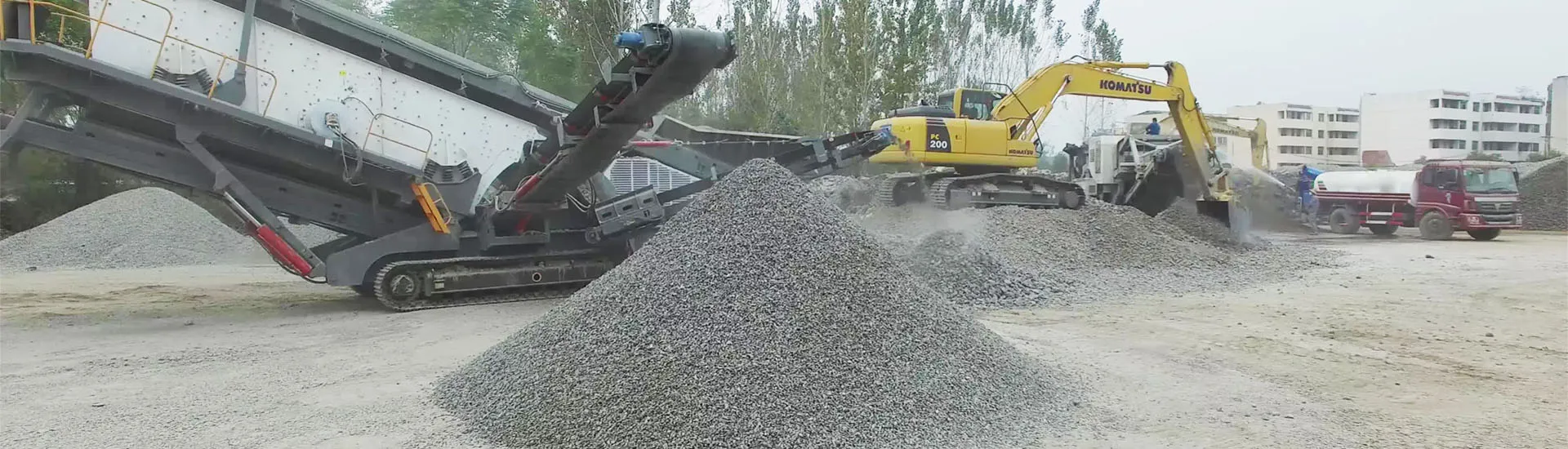
In high-capacity aggregate plants and metal mines, the tertiary and quaternary crushing circuits represent the primary bottleneck governing final product quality and plant economics. Among all operating parameters of a multi-cylinder hydraulic cone crusher, the Closed Side Setting (CSS) is the single most critical variable dictating particle size distribution (PSD), product flakiness, and crushing circuit throughput. However, under the unrelenting abrasive attrition of quartz, granite, or basalt ore, manganese liners experience continuous dimensional loss, widening the CSS hour by hour. Without an automated, real-time closed side setting calibration regime, circuit recirculating loads surge, and final product fractions quickly deviate from tight commercial aggregate specifications.

1. Physics of Mantle Wear and the Drifting Discharge Gap
During secondary and tertiary crushing, compressive stresses in the crushing cavity frequently exceed 250 to 350 MPa. While high-manganese alloys (such as Mn18Cr2) rely on impact energy to induce work hardening on the liner surface, abrasive friction from micro-sliding rock particles constantly strips the hardened austenitic matrix. As the mantle and concave wear away, the physical discharge dimension shifts in three distinct manners:
Volumetric Chamber Expansion: Liner wear does not occur uniformly along the vertical crushing profile. The parallel zone at the lower end of the cavity wears fastest, reducing retention time and allowing oversize slabs to pass uncrushed.
Circulating Load Escalation: In a closed crushing circuit with vibrating screens, an unmonitored CSS expansion of just 3 mm can increase screen oversize recirculation by 25% to 40%, unnecessarily consuming conveyor and screening capacity.
Flakiness and Elongation Degradation: When the CSS widens, the inter-particle breakage mechanism (rock-on-rock attrition) transitions toward unconfined free-fall impact, drastically degrading the flakiness index of concrete aggregates.
2. Automated Hydraulic Calibration: Linear Transducers vs Acoustic Sensors
Modern cone crushers engineered by Sanming Machinery integrate closed-loop automated calibration architectures to eliminate manual lead-wire gap measurements. Two proven industrial methodologies ensure zero-downtime CSS consistency:
Magnetostrictive Hydraulic Stroke Positioning: High-precision linear displacement transducers installed directly within the hydraulic tramp release and adjustment cylinders continuously track the vertical displacement of the mainshaft or adjustment ring. By coupling hydraulic cylinder position data with pre-programmed mathematical liner wear curves, the PLC automatically pulses the hydraulic directional valve to index the bowl downward, restoring the nominal CSS while the crusher operates under load.
Touch-Point Zero Calibration: During scheduled shift changeovers or empty-chamber intervals, the automated control system initiates an automated zero-calibration sequence. The hydraulic cylinder gently drives the mantle into light contact with the concave until hydraulic pressure spikes to a predetermined calibration threshold (e.g., 18 MPa). The PLC instantly marks this coordinate as absolute mechanical zero, compensates for accumulated wear, and retracts the cylinder to the exact target CSS within 0.2 mm accuracy.
3. Closed-Circuit Integration: Interlocking Feed Rate with Motor Power and Hydraulic Pressure
Maintaining a stable CSS is only half the engineering equation; the cone crusher must operate under choke-fed conditions to maximize inter-particle attrition. At Sanming Machinery, automated CSS control is interlocked with automated feed regulation:
Power Draw Feedback: If the main electric motor power draw approaches 90% of rated capacity during high-hardness ore surges, the PLC momentarily expands the CSS by 0.5–1.0 mm to protect mechanical components, re-tightening as power stabilizes.
Hydraulic Clamping Pressure: Real-time differential pressure transmitters monitor clamping ring integrity, ensuring zero thread backlash and preventing bowl creep under heavy cyclical shock loads.
4. Targeted Technical FAQ: Cone Crusher CSS Calibration
Q1: How frequently should a primary or tertiary cone crusher undergo zero-point touch calibration?
A: For highly abrasive ores (abrasiveness index Ai > 0.25, such as gold quartz veins or high-silica granite), automated touch-point calibration should be executed every 8 to 12 operating hours, ideally during shift handovers. For non-abrasive limestone, a daily 24-hour calibration cycle is sufficient.
Q2: Why does product PSD still degrade even if the hydraulic position sensor indicates the CSS is correct?
A: Hydraulic linear sensors track vertical displacement, but if ore feed distribution is segregated (coarse feed biased to one side of the cavity), liner wear becomes severely eccentric. In an eccentrically worn chamber, the physical gap varies around the circumference, allowing slabby aggregate to bypass. Feed hopper level monitoring and rotating feed distributors are essential companion solutions.
Q3: What is the maximum permissible liner wear before the bowl must be mechanically reset or replaced?
A: Liners should be replaced before wear exceeds 75% to 80% of original manganese thickness, or when the hydraulic adjustment cylinder reaches the mechanical end-of-stroke limit. Running liners to catastrophic wear risks crushing chamber structural cracking and hydraulic cylinder bottoming-out.
Engineering Consultation and Hydraulic Cone Retrofits
Struggling with excessive aggregate flakiness or recirculating load bottlenecks in your secondary or tertiary crushing circuits? Sanming Machinery provides engineered multi-cylinder hydraulic cone crushers, automated CSS control retrofits, and high-durability alloy wear packages engineered for extreme mining conditions.