 English
 Russian

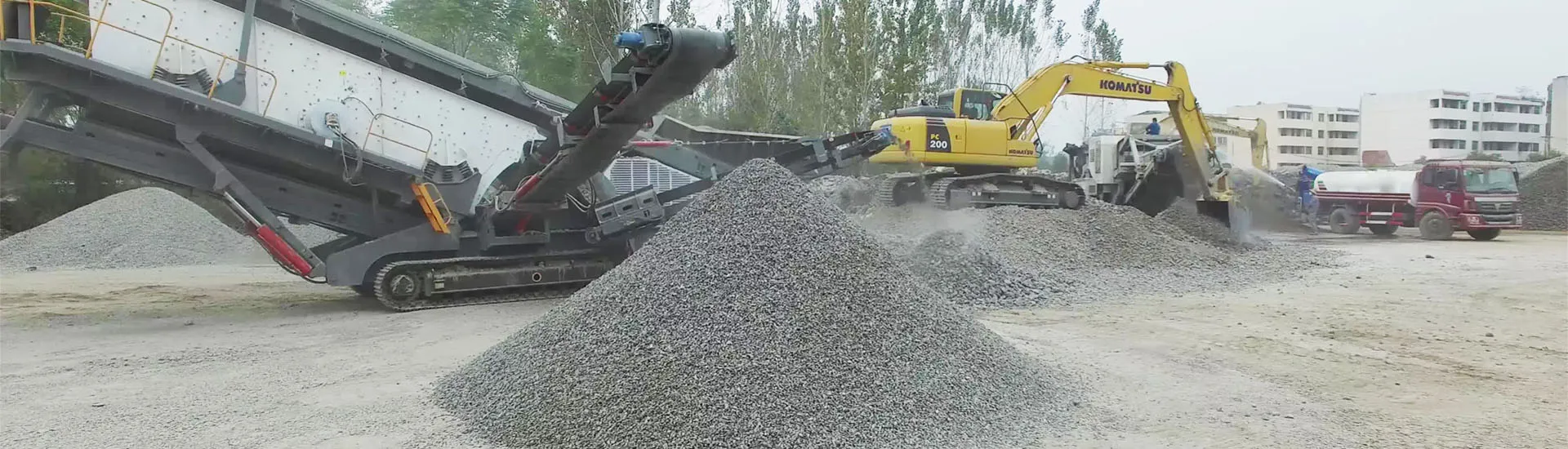
Abnormal high-amplitude vibration in a heavy-duty primary jaw crusher is a catastrophic warning sign indicating severe mechanical unbalance, bearing degradation, or sub-base resonance. Operating a jaw crusher under persistent excessive vibration accelerates fatigue cracking across fabricated side plates, loosens anchor tie-down bolts, causes catastrophic spherical roller bearing seizure, and transmits destructive dynamic shockwaves into surrounding plant civil infrastructure. Systematically isolating root causes—ranging from eccentric shaft dynamic runout to flywheel keyway slack—is essential for safeguarding heavy mining machinery assets.

1. Critical Fault Tree: The 4 Primary Root Causes of Crusher Vibration
Field vibration diagnostics using triaxial piezoelectric accelerometers classify structural excitation into four distinct failure mechanisms:
1. Flywheel and Sheave Unbalance: Heavy dual flywheels provide mechanical inertia to smooth peak crushing loads. If counterweight balance blocks shift, balance lead plugs dislodge, or debris cakes inside the spoke webbing, rotational unbalance produces severe 1X running speed radial vibration peaks exceeding 15 mm/s RMS.
2. Eccentric Shaft Deflection and Runout: Continuous rock overload or repeated uncrushable tramp iron impacts can cause plastic bowing of the forged 42CrMo eccentric shaft. Dynamic radial runout exceeding 0.15 mm to 0.20 mm at the bearing journals induces high 2X harmonic vibration and severe axial thrust surging.
3. Loose Flywheel Keyways & Clamping Sleeves: When tapered clamping sleeves or drive keys lose interference fit, the flywheel wobbles cyclically on its tapered shaft seat. This generates sharp impacting noise and high-frequency harmonics (3X to 5X) that destroy bearing raceways within hundreds of hours.
4. Structural Foundation Resonance: If the operating rotational frequency of the crusher (typically 220–280 RPM or 3.6–4.7 Hz) closely coincides with the natural resonance frequency of the steel support frame or concrete footing, dynamic amplitude multiplies by 300% to 500%, shaking entire conveyor galleries.
2. Field Vibration Severity Standards & Diagnostic Matrix
| Vibration Velocity (RMS, mm/s) | Operating Condition Status | Recommended Engineering Action |
|---|---|---|
| < 4.5 mm/s | Zone A: Excellent / Smooth Operation | Normal routine lubrication and temperature checks |
| 4.5 – 7.1 mm/s | Zone B: Acceptable for Long-term Run | Monitor trend; inspect foundation anchor bolt tension |
| 7.1 – 11.2 mm/s | Zone C: Restricted Operating Alert | Schedule shutdown inspection; check flywheel alignment & shaft runout |
| > 11.2 mm/s | Zone D: Critical Alarm / Immediate Trip | Immediate emergency stop to prevent frame fracture or bearing seizure |
3. Vibration Isolation & Foundation Damping Retrofit SOP
Modern primary crushing stations engineered by Sanming Machinery (PE Jaw Crusher Series) incorporate modular vibration isolation systems:
Elastomeric Damping Pads: Rather than rigid direct grouting, high-durometer multilayer elastomeric rubber-metal sandwich dampers are placed beneath the four frame support feet, isolating up to 85% of dynamic crushing impulses from the civil foundation.
Tension Tie-Rod Spring Calibration: Verify that the pitman return spring tie-rod has not bottomed out. A coil-bound spring transmits unbuffered pitman inertia directly into the rear cross-beam, driving severe low-frequency chattering.
4. Technical FAQ: Practical Diagnostic Questions
Q1: Can dynamic balancing of the jaw crusher flywheels be performed on-site without disassembly?
A: Yes. Using portable dual-channel vibration analyzers with optical tachometer phase triggers, field technicians can perform single-plane or two-plane dynamic balancing while running the crusher unloaded. Trial weights are attached to balance holes in the flywheel rim, calculating exact correction weights to reduce 1X vibration below 3.0 mm/s.
Q2: How do you distinguish between bearing raceway spalling and shaft deflection?
A: Perform Fast Fourier Transform (FFT) spectrum analysis. Shaft deflection or unbalance manifests predominantly as high 1X and 2X rotational peaks. Bearing inner or outer raceway spalling produces non-synchronous high-frequency defect frequencies (BPFO, BPFI) surrounded by sidebands, typically detected in the 500 Hz to 2,000 Hz demodulation range.
Q3: Why does vibration intensify when the crusher operates under full choke feed compared to idling?
A: Under choke feed, dynamic crushing forces reach hundreds of tons. If the toggle plate seats (toggle plate socket liners) are worn or unlubricated, the toggle plate shifts and chatters on each stroke, transferring massive mechanical shock loads into the main frame.
Crusher Mechanical Inspection & Engineering Support by Sanming Machinery
Experiencing severe crusher shaking, cracked foundation plinths, or frequent bearing replacements? Sanming Machinery mechanical service teams provide structural FEA analysis, precision forged shafts, and modular damping retrofits worldwide.