 English
 Russian

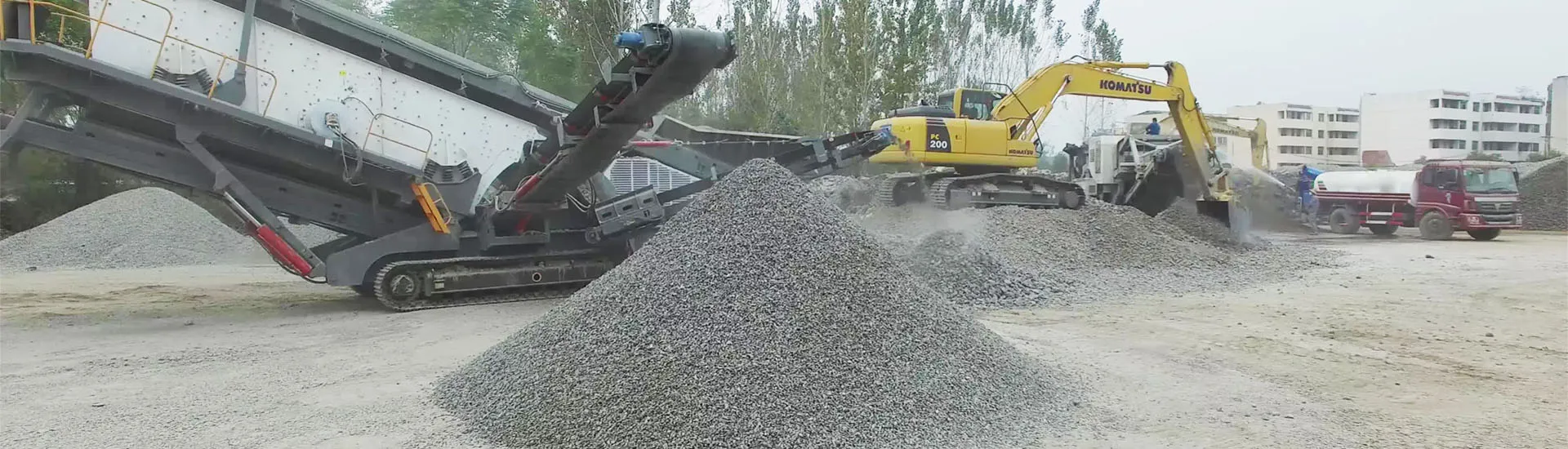
Engineering Challenges of Cone Crusher Wear Profiles
In secondary and tertiary aggregate crushing stages, hydraulic cone crushers rely on the continuous compressive action between the gyrating mantle and the stationary concave (bowl liner). These liners endure intense abrasive grinding, multi-axial shear stress, and repeated high-energy compression. Premature liner discard, localized cupping wear, and backing compound failure represent substantial operational costs. Maximizing mantle and concave service life requires optimizing austenitic manganese metallurgy, executing precise resin backing compound installations, and maintaining strict choke-fed cavity conditions.
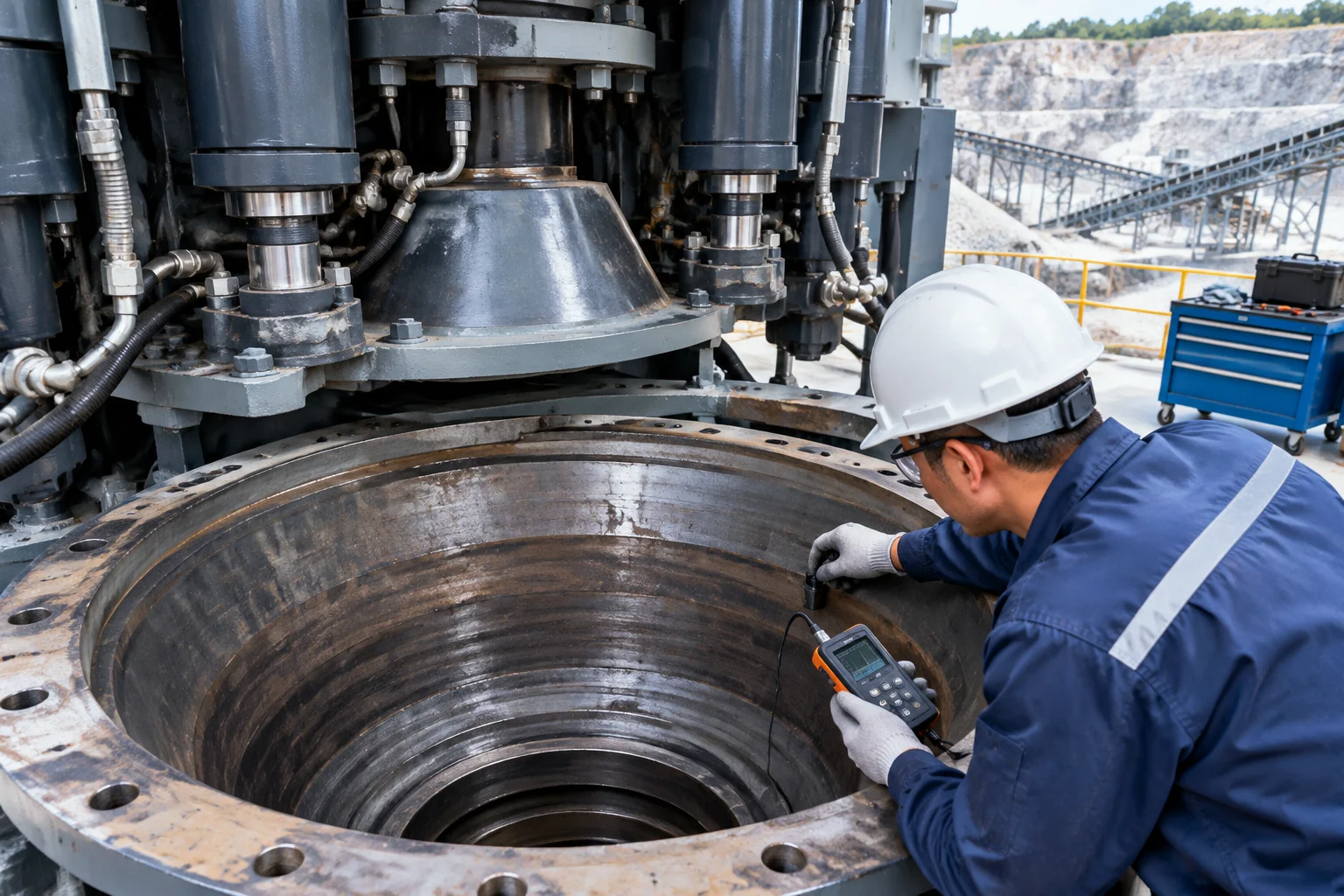
Metallurgical Selection: Matching Manganese Grades to Rock Hardness
Austenitic manganese steel (Hadfield steel) relies on work-hardening under severe mechanical impact. If the crushing chamber dynamics do not impart sufficient compressive force, the steel will not achieve its full surface hardness (up to 500-550 HBW), resulting in rapid abrasive wear. Sanming Machinery recommends tailoring alloy chemistry to feed characteristics:
Medium-Hard Rocks (Limestone & Dolomite): Standard Mn14Cr2 provides dependable work-hardening with balanced impact toughness.
Hard & Abrasive Rocks (Granite & Basalt): High-manganese Mn18Cr2 offers a higher strain-hardening rate, extending liner wear life by 20% to 30% under heavy impact loads.
Extreme Quartzite & River Gravel (SiO2 > 70%): Super-manganese Mn22Cr2 or customized manganese inserts embedded with titanium carbide (TiC) columns withstand severe micro-cutting and gouging wear.
Backing Compound Application and Choke-Feeding Dynamics
Improper backing compound installation creates localized air voids behind the liners. Under high hydraulic crushing forces, these unsupported voids cause severe flexing, leading to liner cracking and irreversible damage to the crusher head and adjustment bowl. Key installation and operational protocols include:
Surface Preparation & Preheating: Ensure mating surfaces are thoroughly degreased, dry, and preheated to 20°C - 30°C before pouring two-component high-compression epoxy backing resin.
Pouring Uniformity: Pour backing compound continuously from a single entry point to avoid entrapping air pockets, allowing minimum 12-hour curing prior to mechanical loading.
True Choke-Feeding: The feed hopper must remain continuously full (material level 300mm above mantle nut). Choke-feeding forces rock-on-rock inter-particle breakage, distributing wear evenly across the entire chamber profile and eliminating cupping rings.
Technical FAQ: Cone Crusher Liners
Q1: Why does a deep localized wear ring (cupping) form on the lower third of the concave?
Cupping wear is primarily caused by operating the cone crusher in a trickle-feed condition rather than under true choke feed. When material trickles into the cavity, crushing occurs solely in the parallel sizing zone at the bottom, concentrating all compressive wear on a narrow band. Always maintain a flooded feed hopper using automated surge bins and variable speed feeders.
Q2: When should mantle and concave liners be replaced to prevent catastrophic damage?
Liners should be replaced when the nominal thickness has worn down by 70% to 75%, or when the liner profile becomes so distorted that the target closed-side setting (CSS) cannot be achieved without structural interference. Allowing liners to wear through to the backing resin exposes the head and bowl steel castings to severe impact damage.