 English
 Russian

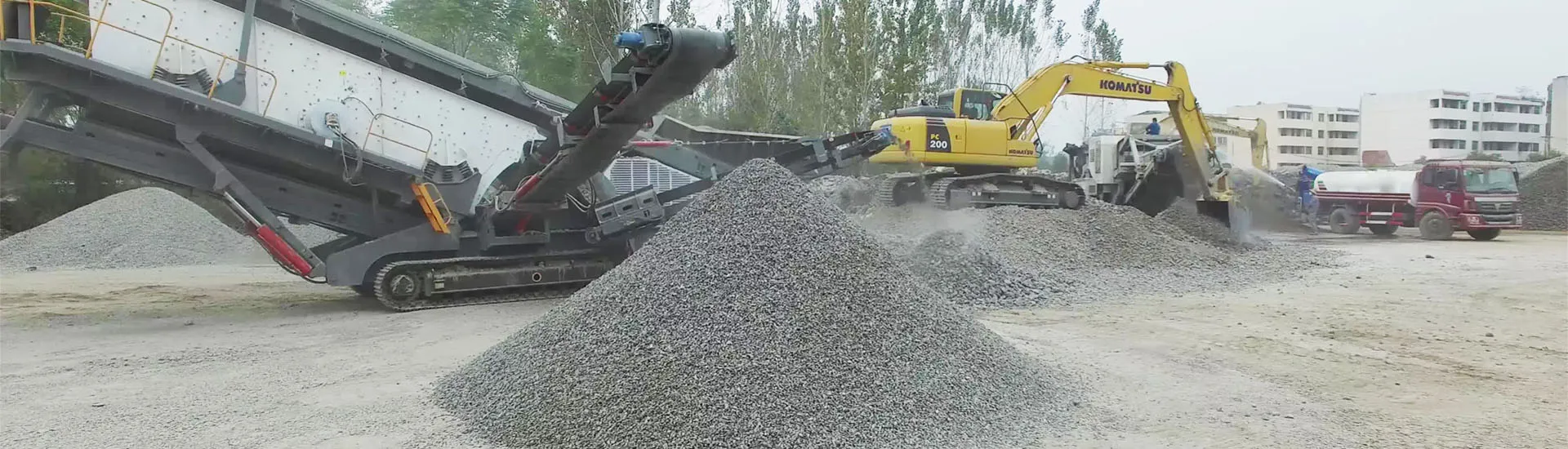
The Cost of Screen Blinding and Pegging in Aggregate Sizing
Screening efficiency directly dictates overall plant throughput and aggregate compliance. In wet seasons or when crushing moisture-rich feeds (clay content > 2%, moisture 4% - 8%), traditional woven wire mesh rapidly succumbs to blinding (damp fines plastering across apertures) and pegging (near-size particles wedging in openings). As effective open screen area plummets by 40% to 70%, undersize fines carry over into coarse aggregate stockpiles, failing ASTM/EN sizing standards and forcing unbudgeted plant shutdowns for manual high-pressure washing.
Polyurethane Screening Media Engineering
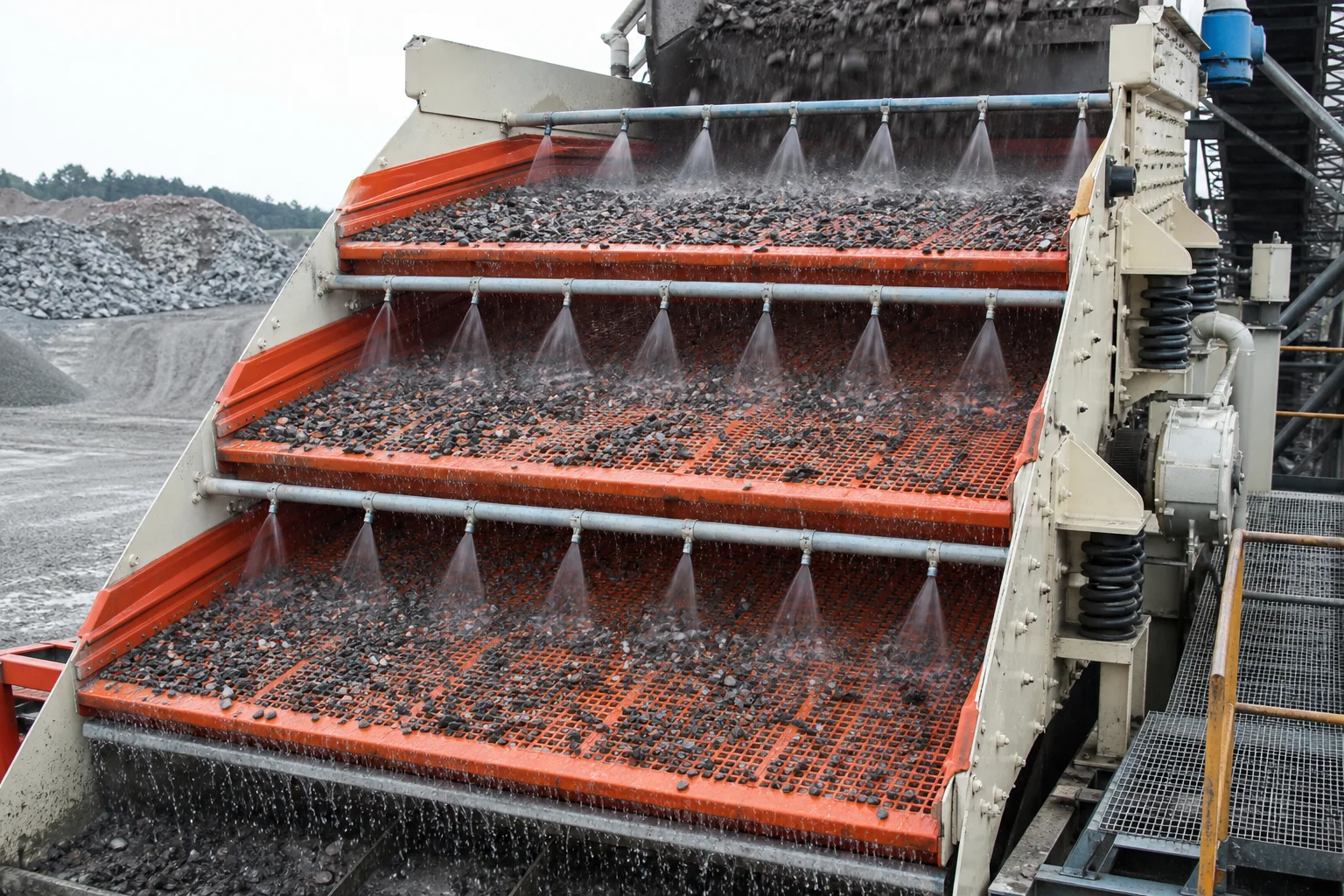
Switching from rigid wire mesh to modular polyurethane screen panels eliminates surface adhesion through material elasticity and aperture geometry. Sanming Machinery customizes screening media based on moisture and particle distribution:
Tapered Self-Relieving Apertures: Polyurethane apertures are cast with a downward expanding taper (relief angle 5° to 7°), ensuring any particle passing the top aperture drops freely without wedging.
Elastic Secondary Vibration: Flexible polyurethane membranes and thin-bar modular panels vibrate independently of the screen frame, generating dynamic micro-flexing that shears sticky clay coatings.
Wear Life Superiority: High-grade cast polyurethane provides 4 to 8 times the operational wear life of high-carbon spring steel wire, significantly reducing maintenance downtime in abrasive quartz and granite processing.
Vibrating Screen Mechanical Dynamics and Water Spray Design
Equipment motion dynamics must deliver sufficient G-force acceleration to prevent bed stratification collapse:
Stroke Amplitude and G-Force: For damp, sticky aggregate classification, circular motion screens should operate with a stroke amplitude of 8 to 10 mm and an acceleration rating of 3.8G to 4.5G.
Deck Angle of Inclination: Maintaining a 18° to 20° deck slope ensures rapid aggregate travel across the feed zone, thinning the material bed to allow trapped moisture to escape.
High-Pressure Spray Bars: Installing high-pressure polyurethane fan-jet spray nozzles (water pressure 0.25 - 0.35 MPa, volume 1.5 - 2.0 m3 of water per ton of feed) rapidly slimes off sticky surface clays on the top deck.
Technical FAQ: Vibrating Screen Optimization
Q1: How do I choose between square apertures and slotted apertures for fine damp screening?
For feeds with moisture above 4%, slotted apertures aligned parallel to material flow dramatically increase open area and prevent blinding. Square apertures offer tighter particle size control but blind quickly. If flakiness is not an issue, slotted apertures deliver 30% higher screening efficiency under sticky conditions.
Q2: Why does an inclined vibrating screen experience excessive blinding near the feed end?
The feed end receives the thickest material bed with highest moisture content. Aggregate lacks sufficient velocity to stratify, suffocating the screen deck. Install larger aperture punch plates or blank impact panels in the first 1 meter of the feed zone, and reposition spray headers to saturate the material bed immediately upon entry.