 English
 Russian

With electrical energy consumption accounting for over 50% of concentrator operating expenditures, mineral processing engineers face a critical decision in tertiary and quaternary comminution circuits: installing High Pressure Grinding Rolls (HPGR) versus modern heavy-duty tertiary hydraulic cone crushers. In processing hard copper, gold, and iron ores, evaluating HPGR against cone crushers extends far beyond the crusher discharge size distribution; it directly impacts micro-crack generation, downstream ball mill Bond Work Index reduction, and circuit moisture sensitivity.

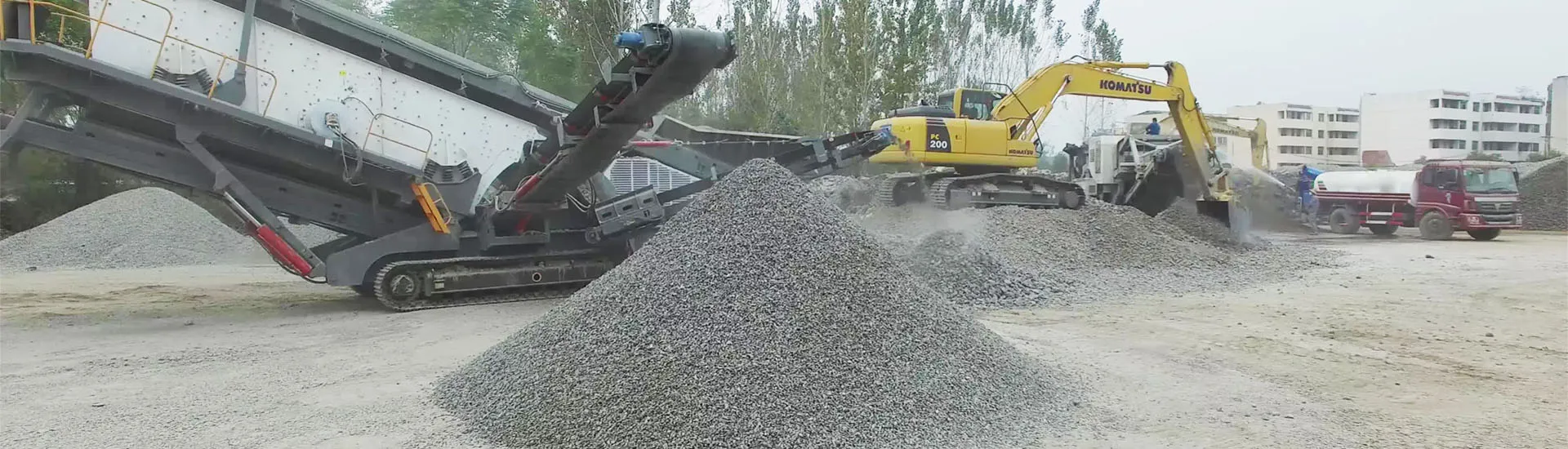
Figure 1: High-efficiency mineral processing circuit comparing High Pressure Grinding Rolls and multi-cylinder tertiary cone crushing stages.
1. Comminution Mechanism: Inter-Particle Bed Compaction vs Single-Layer Attrition
The mechanical difference between HPGR and cone crushing determines the structural condition of the crushed mineral grains:
Tertiary Cone Crusher (Single-Layer & Inter-Particle Impact): In a Sanming Machinery Multi-Cylinder Cone Crusher, material is crushed between an eccentrically gyrating mantle and fixed bowl liners. Particles fracture along natural cleavage planes under high compressive and shear strain. Product particles are cubical with intact internal crystal matrices.
HPGR (High-Pressure Inter-Particle Bed Crushing): HPGR compresses a continuous bed of ore between counter-rotating rollers studded with tungsten carbide pins at specific pressing forces exceeding 2.5 to 4.5 N/mm². Rather than fracturing solely from direct steel contact, particles crush against adjacent particles under intense hydrostatic confinement.
The Micro-Crack Phenomenon: The extreme compressive stress field inside the HPGR particle bed induces pervasive micro-cracking across mineral grain boundaries without completely pulverizing the rock. Consequently, the Bond Ball Mill Work Index (Wi) of HPGR-crushed product decreases by 12% to 25%, drastically cutting power draw in downstream grinding mills.
| Performance Parameter | Heavy Tertiary Cone Crusher | High Pressure Grinding Roll (HPGR) |
|---|---|---|
| Specific Energy Consumption | 1.8–2.8 kWh/ton (crushing stage only) | 1.2–2.2 kWh/ton (crushing stage only) |
| Downstream Ball Mill Energy | Baseline standard Bond Work Index | 15% to 25% lower energy draw due to micro-cracks |
| Moisture Sensitivity | High tolerance (handles damp ore up to 8% moisture) | Sensitive (feed moisture must stay between 1% and 5%) |
| Product Size Distribution | F80 40 mm → P80 10–14 mm (steep curve) | F80 35 mm → P80 4–8 mm (wide curve with 30% <1mm fines) |
| Capital Cost (CAPEX) | Baseline (1.0x) - lower mechanical & structural weight | 2.5x to 3.8x baseline - heavy planetary drives and frames |
2. Feed Moisture Limitations and Flake De-agglomeration
While HPGR offers superior energy efficiency, plant layout constraints often dictate selection:
Feed Moisture Window: If ROM ore moisture exceeds 6%–8% due to wet mining seasons or clay seams, ore turns into plastic mud under HPGR pressure rolls. It forms impenetrable compressed briquettes (flakes) that blind downstream screens and slip between rollers. Multi-cylinder hydraulic cone crushers tolerate high moisture feeds with zero roll slippage.
Flake Disintegration Requirements: HPGR discharge product emerges largely as compacted briquettes or flakes. It requires dedicated wet scrubber trommels or high-energy vibrating screens with spray bars to de-agglomerate the flakes prior to ball mill classification.
Tire Stud Maintenance vs Cone Liners: HPGR roll tires with carbide studs provide 6,000 to 12,000 operating hours between rebuilds. However, replacing or re-studding an HPGR roll tire requires specialized heavy hydraulic pulling rigs and several days of downtime, whereas cone crusher mantle and bowl liners can be swapped in 8 to 12 hours.
3. Technical FAQ: Comminution Circuit Selection
Q1: Under what plant conditions is an HPGR clearly superior to cone crushers?
A: In large-scale hard rock plants (>20,000 tpd) with dry ore (<4% moisture) and high local electricity tariffs, where reducing downstream ball mill power by 20% yields multi-million-dollar annual OPEX savings.
Q2: Can a tertiary cone crusher circuit achieve the same product fineness as HPGR?
A: Operating in closed circuit with high-frequency vibrating screens, modern short-head hydraulic cone crushers can generate a P80 of 8–10 mm. However, they generate significantly fewer sub-millimeter fines and zero micro-cracking compared to HPGR.
Q3: How does tramp metal protection compare between the two units?
A: Both require tramp metal magnets and metal detectors. Cone crushers utilize hydraulic tramp release cylinders, whereas HPGR systems retract the floating roll via high-speed hydraulic relief accumulators within 50 milliseconds.
4. Flowsheet Optimization and Equipment Selection Support
Sanming Machinery provides engineering evaluation, pilot testing data interpretation, and equipment packages including heavy-duty hydraulic cone crushers and fine grinding circuits. Contact our process engineers for crushing circuit simulation and Capex/Opex modeling.