 English
 Russian

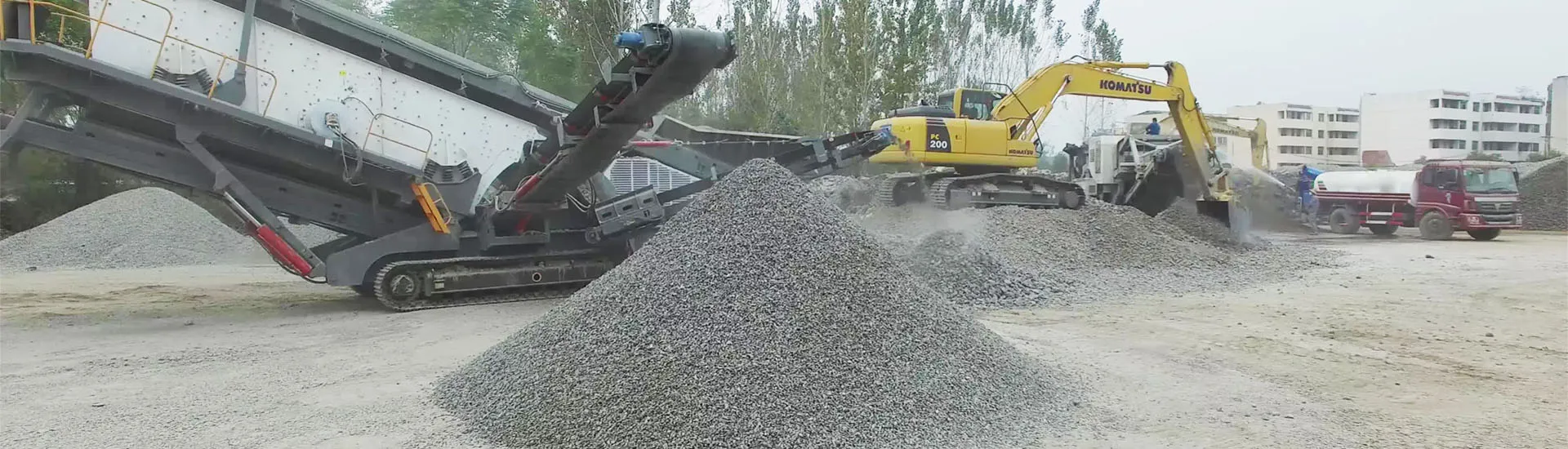
In secondary and tertiary aggregate crushing plants processing limestone, dolomite, sandstone, and recycled asphalt concrete, horizontal shaft impactors (HSI) deliver high reduction ratios and excellent cubic particle shaping. However, operating profitability hinges directly on blow bar consumption. Selecting between high-chromium white iron (Cr26/Cr27), martensitic alloy steel, and ceramic metal matrix composite (MMC) inserts requires matching ore abrasiveness and feed lump mass against fracture toughness limits.

Figure 1: Heavy-duty secondary horizontal shaft impact crusher featuring ceramic-reinforced blow bars and hydraulic curtain adjustment.
1. Metallurgy Comparison: High Chrome vs Martensitic Ceramic Inserts
Blow bars must simultaneously resist catastrophic impact fracture from high-velocity rock collisions and extreme abrasive scouring as material slides across the striking face:
High-Chromium White Iron (Cr26–Cr28, 62–65 HRC): Boasting a high volume fraction of eutectic M7C3 chromium carbides embedded in a hardened martensitic matrix, high-chrome bars offer unrivaled wear resistance in low-to-medium silica rock (limestone, clean dolomite). However, their Charpy V-notch impact toughness is low (<5 J/cm²). Feed boulders exceeding 150 mm or tramp steel will shatter high-chrome bars instantly.
Martensitic Alloy Steel (50–54 HRC): Martensitic bars provide far higher ductility and impact toughness (>25 J/cm²), making them resilient against feed surges and occasional uncrushable steel. Yet their sliding abrasion resistance is modest, causing premature rounded nose profiles in abrasive river gravels.
Ceramic Matrix Composite Inserts (MMC): Sanming Machinery Ceramic Composite Blow Bars combine deep-cast porous aluminum-titanium ceramic oxide grains (hardness 80–85 HRC) fused inside a high-strength martensitic or chrome steel body. The ceramic matrix absorbs high-speed sliding abrasion, while the surrounding ductile alloy prevents crack propagation, extending wear life by 2.0x to 3.5x over standard alloys.
| Blow Bar Alloy Type | Hardness Range | Impact Toughness | Recommended Feed Application |
|---|---|---|---|
| High Chrome (Cr26-Cr28) | 62–65 HRC | Low (< 5 J/cm²) | Secondary limestone, soft sandstone; feed < 100 mm |
| Martensitic Alloy Steel | 50–54 HRC | Very High (> 25 J/cm²) | Recycling asphalt/concrete with tramp rebar; primary feeds |
| Ceramic Composite (MMC) | Inserts 82–85 HRC / Matrix 52–54 HRC | High (toughness of matrix) | Abrasive river gravel, granite tailings, slag; feed < 150 mm |
2. Critical Operating Controls to Prevent Premature Breakage
Even premium ceramic-inserted blow bars will fail prematurely if basic mechanical operating parameters are ignored:
Rotor Tip Speed vs Feed Penetration: Blow bar wear is maximized when feed lumps penetrate deep enough into the rotor circle to be struck squarely on the striking face (top 20–35 mm). Operating at excessive tip speed (>38 m/s) prevents feed penetration; rock skims over the blow bar crest, eroding the rotor holding wedges.
Symmetrical Turning SOP: Reversible blow bars must be turned before the striking face wears past the designated wear limit line (typically 45%–50% of original height). Waiting until the bar assumes an acute hook profile causes wedge locking and distorts rotor slots.
Rotor Pocket Cleaning: When reinstalling rotated bars, clean all packed aggregate and fines out of the rotor bar seat using a pneumatic scraper. A trapped 3 mm stone under the blow bar creates point loading that snaps high-chrome bars during the first start-up hour.
3. Technical FAQ: Blow Bar Maintenance
Q1: Why do blow bars break in half across the center slot?
A: Center fracturing is almost always caused by uneven wedge clamping pressure or failure to tighten all locking wedges with a calibrated torque wrench. Unequal clamping allows the bar to flex microscopically under impact shock, initiating fatigue cracks.
Q2: Can ceramic composite blow bars be used in recycling concrete with rebar?
A: Yes, provided the base metal is tough martensitic steel rather than high chrome. The martensitic matrix prevents catastrophic breakage when rebar wraps around the rotor, while the ceramic inserts resist aggregate abrasion.
Q3: How often should blow bar balance be verified?
A: Always weigh new or turned bars prior to insertion. Opposite blow bars on the rotor must balance within ±0.5 kg to avoid severe bearing vibration.
4. Engineering Support and Crusher Wear Optimization
Sanming Machinery manufactures heavy-duty horizontal shaft impact crushers and precision-cast blow bars engineered for maximum wear uptime. Contact our technical team for rotor chamber simulations, wear cost benchmarking, and customized alloy packages.