 English
 Russian

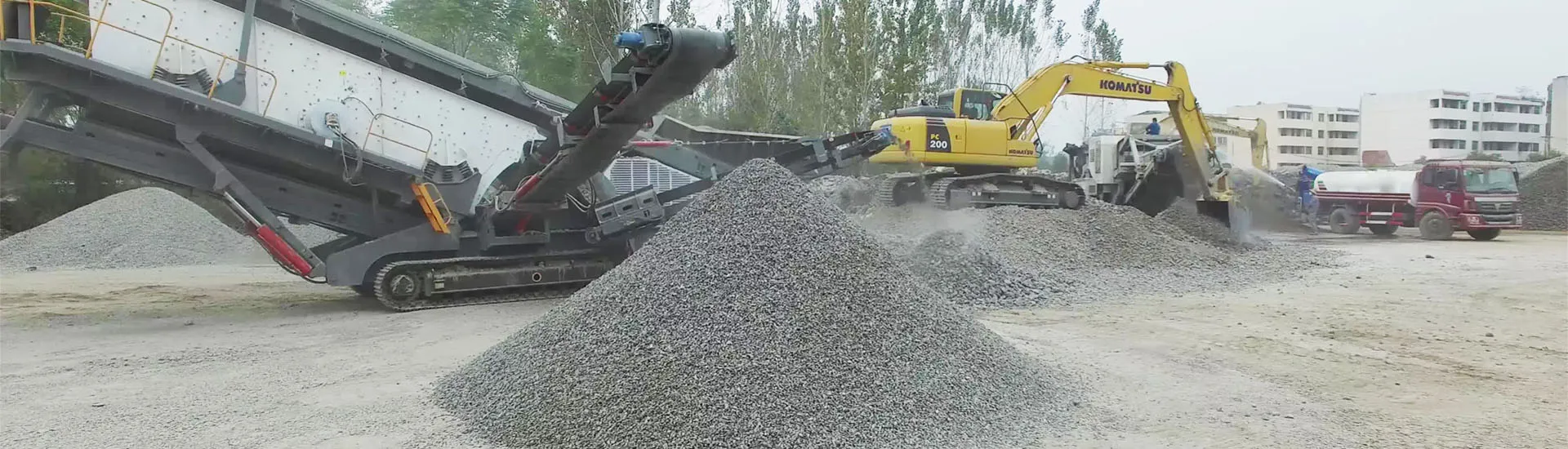
The Critical Role of Crushing in Spodumene DMS Beneficiation
Dense Medium Separation (DMS) serves as the most cost-effective pre-concentration technology for hard-rock spodumene lithium pegmatite ores (such as major projects across Western Australia, Zimbabwe, Mali, and Canada). DMS efficiently rejects 50% to 70% of barren silicate gangue (quartz, feldspar) at a coarse liberation size (typically 1.0 mm to 10.0 mm). However, the Achilles heel of lithium DMS circuits is excessive fines generation (< 0.5 mm or < 1.0 mm). Slimes cannot be effectively separated in dense medium cyclones and must be diverted to expensive flotation circuits or discarded as tailings losses. Engineering an optimized, staged crushing circuit is the single most critical factor in maximizing spodumene recovery.
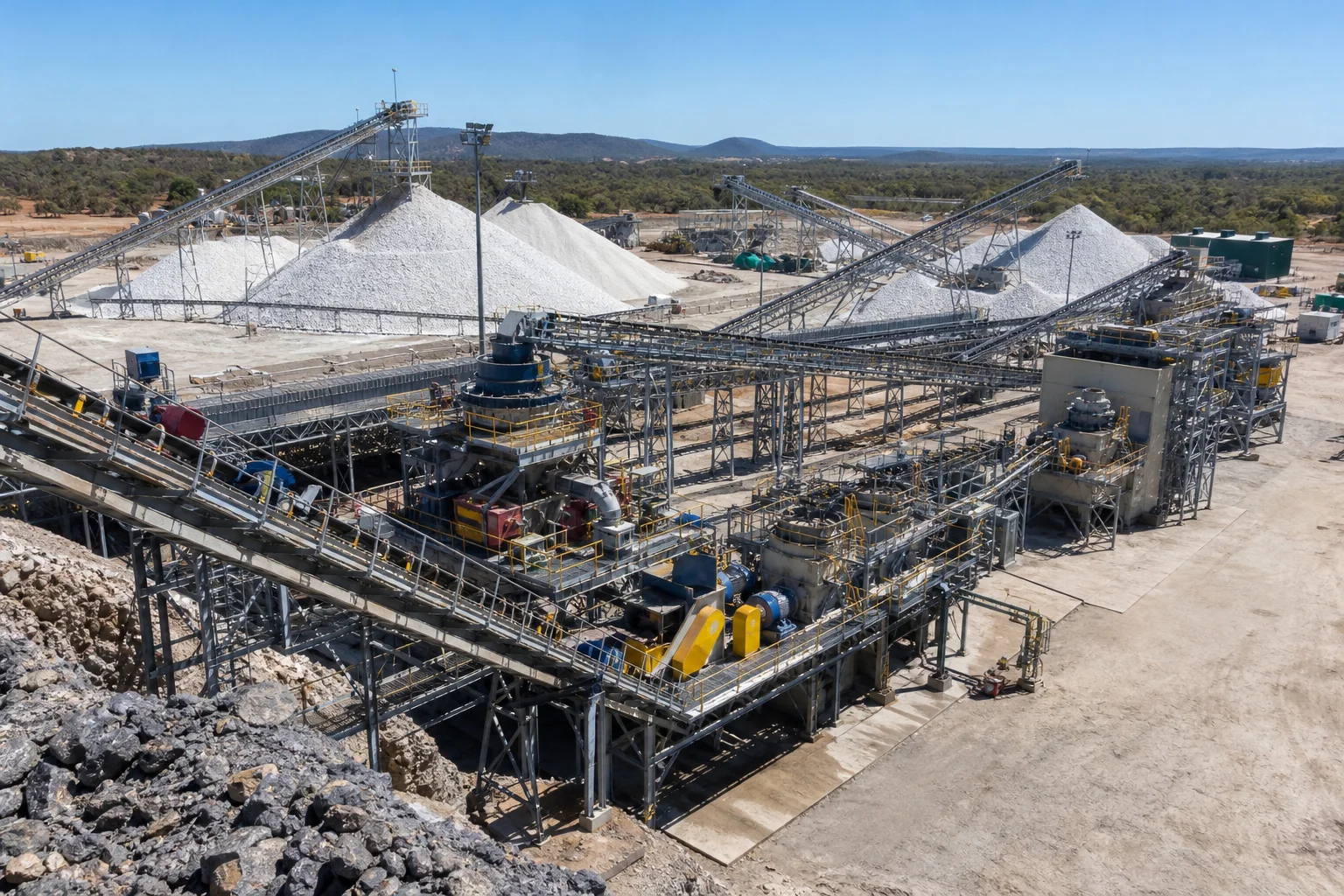
Staged Circuit Flowsheet: Jaw to Hydraulic Cone Crushing
To liberate coarse spodumene laths while minimizing micro-fines generation, Sanming Machinery designs three-stage closed crushing circuits with high-efficiency pre-screening:
Primary Jaw Crushing: Heavy-duty PE series jaw crushers operate at low eccentric shaft speeds with generous discharge openings (CSS 90 - 130 mm), performing gentle single-pass reduction on run-of-mine ore without over-crushing brittle pegmatite minerals.
Scalping Screens Prior to Secondary/Tertiary Crushing: Every crushing stage is preceded by high-capacity vibrating screens. Material already finer than the target cut size bypasses subsequent crushers completely, preventing unliberated spodumene particles from repeated compression cycles.
Secondary and Tertiary Multi-Cylinder Hydraulic Cone Crushers: Multi-cylinder cones utilize precise cavity profiles operating in closed circuit with sizing screens. Controlled closed-side settings (CSS 10 - 14 mm) ensure uniform cubic particle sizing optimized for DMS cyclone hydrodynamic stability.
Operational Strategies to Minimize Spodumene Fines
Controlled Choke Feeding: Operating cone crushers with a consistent choke-fed rock level dampens aggressive point-load impacts, relying on inter-particle attrition that fractures pegmatite along natural cleavage boundaries rather than pulverizing crystals into dust.
Cavity Selection: Utilizing extra-coarse or coarse chamber configurations prevents material pinch-points, ensuring slimes (< 0.5 mm) generation remains strictly under 12% to 15% of total plant feed.
Moisture Control in Crushing: Maintaining ore moisture below 3% avoids pegmatite slurry formation inside crusher cavities, ensuring clean dry classification prior to the DMS desliming screen.
Technical FAQ: Spodumene Lithium Crushing
Q1: Why is vertical shaft impact (VSI) crushing typically avoided for spodumene DMS preparation?
VSI crushers rely on high-velocity kinetic impact (60-80 m/s), which violently shatters brittle spodumene crystals along cleavage planes, generating 25% to 35% ultrafine particles (< 0.5 mm). These fines bypass DMS cyclones and report directly to tailings or overload flotation circuits. Hydraulic cone crushers with controlled compression represent the industry standard for coarse DMS liberation.
Q2: What is the optimal top-size and bottom-size particle envelope for two-stage DMS cyclones?
Industry best practice establishes an envelope of -10 mm to +1.0 mm (or -6.0 mm to +0.8 mm for fine DMS cyclones). Particles coarser than 12 mm risk plugging the cyclone apex nozzle, whereas fines under 0.8 mm contaminate ferrosilicon medium stability, causing high magnetic media consumption.