 English
 Russian
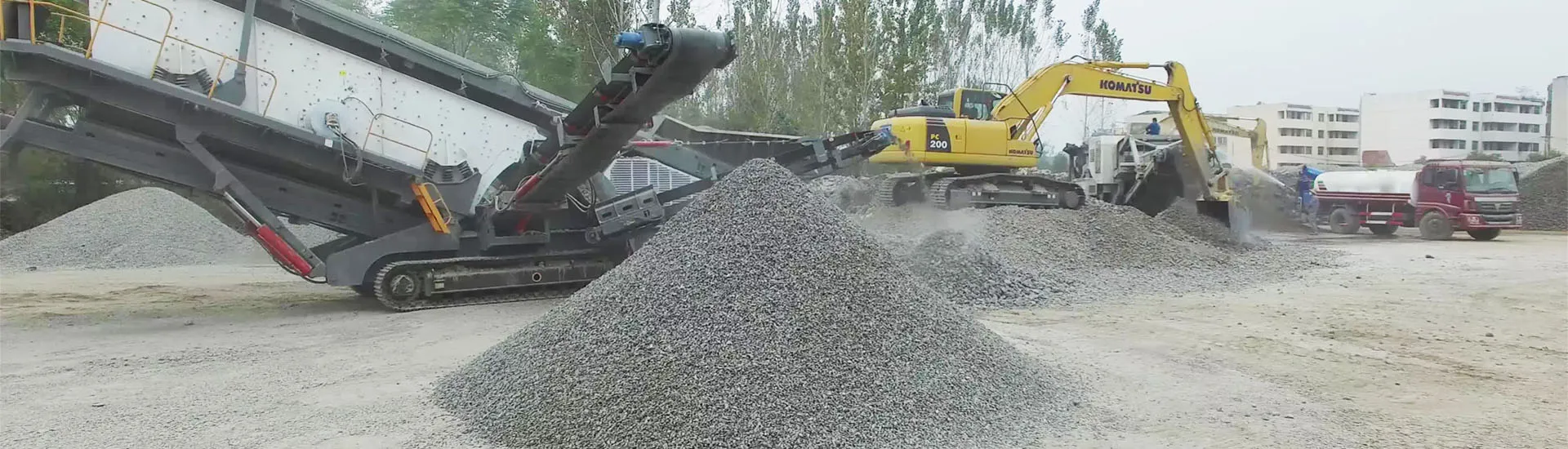
1. Closed Side Setting (CSS) Dynamics Under High Crushing Force
In secondary and tertiary crushing circuits, hydraulic cone crushers determine final particle sizing and grain geometry. The Closed Side Setting (CSS) represents the narrowest opening between the moving mantle and the stationary concave bowl liner during gyration. Over an operational shift of crushing highly abrasive quartzite or basalt, progressive alloy attrition steadily widens this discharge threshold. Without continuous compensation, discharge gradation shifts toward coarser fractions, drastically increasing recirculating screen loads and degrading aggregate flakiness index values.
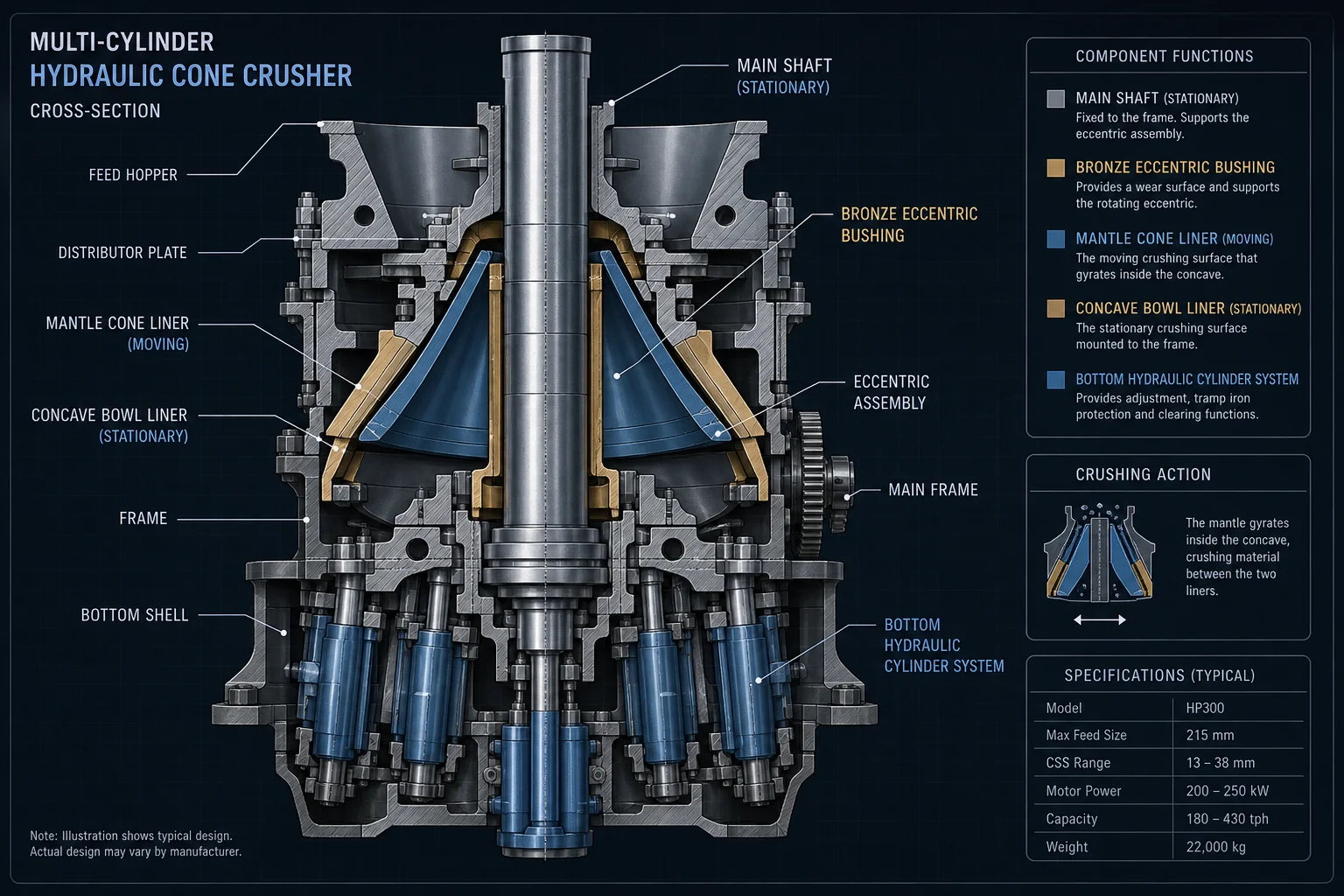
Figure 2: Hydraulic cone crusher cross-sectional profile illustrating cavity reduction zones and hydraulic tramp protection
2. Automated Hydraulic Compensation vs. Mechanical Ring Systems
Modern multi-cylinder hydraulic cone crushers engineered by Sanming Machinery incorporate dynamic pressure and position transducers. As crushing pressures vary under load, high-response proportional hydraulic valves adjust the vertical position of the support bowl or mainshaft cylinder in sub-millimeter increments. Unlike traditional spring-clamping or mechanical adjustment rings that require plant stoppages for manual calibration, real-time hydraulic calibration maintains a stable crushing density inside the parallel zone, guaranteeing strict compliance with international standards such as EN 933-3 (flakiness index < 15%).
3. Cavity Wear Profiling: Preventing Cavitation and Ring Gouging
Liner wear does not occur uniformly. The crushing chamber is segmented into an upper impact zone, an intermediate reduction zone, and a lower parallel sizing zone. Uneven feed distribution—such as segregating coarse feed to one side and fines to the other—causes localized cavitation and severe bowl ring gouging. Maintaining a centered, homogeneous feed choke ensures that wear proceeds evenly across both Mn18Cr2 castings, enabling plant operators to consume over 75% of the liner casting weight before scheduled replacement.
Technical FAQ — Cone Crusher Optimization
Q1: How does hydraulic tramp iron relief protect the eccentric bushing?
A1: When uncrushable tramp metal enters the chamber, hydraulic accumulators compress instantly, allowing hydraulic oil to bypass into the accumulator manifold. The bowl raises rapidly to clear the obstruction within 0.2 seconds, preventing mechanical shock damage to the bronze eccentric bushing and socket liner.
Q2: What is the primary cause of uneven bowl liner wear?
A2: Particle size segregation in the feed hopper is the leading root cause. Coarse rocks entering on one side cause high localized deflection, while fines on the opposing side create intense grinding abrasion, causing premature liner discard.
Q3: How does choke feeding improve cubical product shape?
A3: Choke feeding forces interparticle compression throughout the parallel sizing zone. Particles break along natural mineral cleavage lines rather than impact fractures, substantially lowering elongation ratios to yield premium cubical concrete aggregates.