 English
 Russian
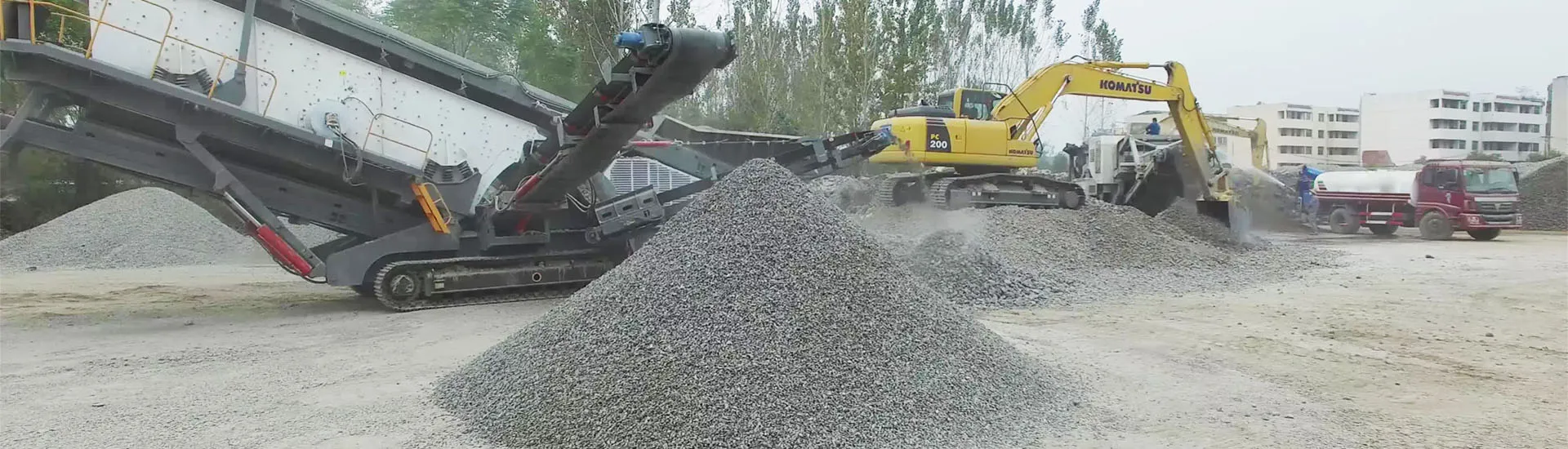
Direct Overview: Secondary Comminution Performance Metrics
Secondary crushing of high-abrasion igneous and metamorphic ores (granite, basalt, quartzite, iron ore with compressive strength exceeding 250–320 MPa) presents the most severe wear and energy bottleneck in aggregate and mineral processing plants. Traditional spring-loaded crushers struggle with excessive product flakiness (often >22%), erratic discharge settings due to manual adjustment, and catastrophic jamming when uncrushable tramp metal enters the chamber.
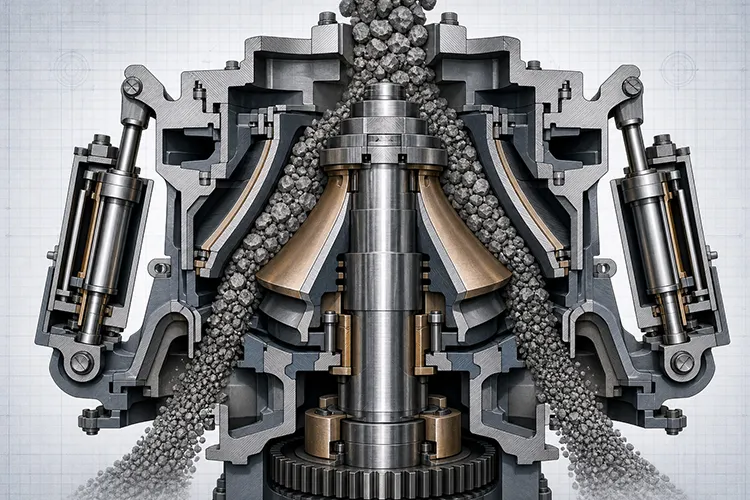
Next-generation Multi-Cylinder Hydraulic Cone Crushers solve these bottlenecks by combining a high rotational speed with an optimized eccentric stroke and a fixed main-shaft geometry. Through high-density inter-particle comminution (laminar crushing), these units deliver:
Flakiness Reduction: Cubical product yields with flakiness and elongation under 10–12%, directly satisfying strict international asphalt and concrete aggregate specifications.
Throughput Density: 25%–35% higher processing capacity compared to same-diameter spring or single-cylinder units under identical closed-side settings (CSS).
Automated Tramp Iron Protection & Cavity Clearing: Multi-cylinder hydraulic accumulators automatically release tramp iron and restore the exact CSS within seconds, or fully open the chamber under load in under 3 minutes, slashing plant downtime by up to 90%.
Core Engineering Innovations
[Choke-Fed Material]
│
▼
┌──────────────────────────────────────────────────┐
│ Fixed Main Shaft Rigid Support │
│ (15-20% higher crushing force vs floating shaft)│
└─────────────────────────┬────────────────────────┘
│
▼
┌──────────────────────────────────────────────────┐
│ Inter-Particle Comminution Dynamics │
│ (High speed + high throw = rock-on-rock impact)│
└─────────────────────────┬────────────────────────┘
│
▼
┌──────────────────────────────────────────────────┐
│ Bidirectional Hydraulic Tramp Relief System │
│ (Automatic overload cushion & push-button clear)│
└──────────────────────────────────────────────────┘
1. Fixed Main Shaft & Substantially Increased Crushing Force
Unlike floating-shaft single-cylinder designs, multi-cylinder cone crushers feature a stationary alloy steel main shaft integrated into the cast mainframe. The eccentric bushing revolves around this rigid column, allowing the machine to exert 15–20% higher crushing forces without shaft deflection or localized bearing overstress.
2. High-Yield Inter-Particle Laminar Comminution
Operating under choked-feed conditions, high throwing frequency compresses multiple material layers against each other rather than relying solely on steel-liner impact. This inter-particle compression selectively breaks rocks along internal natural mineral grain boundaries, producing cubic particles with minimal internal micro-fractures, drastically lowering downstream ball-mill work indices or tertiary shaping requirements.
3. Integrated Positive-Pressure Sealing and Hydraulic Package
A pressurized air-barrier labyrinth prevents hostile silica dust from infiltrating the lubricating oil circuit. Independent dual-circuit lubrication stations continuously monitor oil temperature, differential pressure, and flow rates, automatically interlocking with the feed conveyor to prevent catastrophic bearing wipeouts.
Technical Comparison Matrix
Quantitative Operating Benchmarks & TCO Analysis
In a 250 metric tons per hour (t/h) granite aggregate processing circuit operating 4,000 hours annually (1,000,000 metric tons annual volume), secondary comminution economics depend heavily on liner wear cycles and motor energy efficiency.
Real-World Field Benchmark Data:
Feed Ore: High-quartz granite (abrasion indexAi=0.42, unconfined compressive strength σc=280 MPa).
Feed Fraction: 70–180 mm primary jaw discharge.
Target Closed-Side Setting (CSS): 22 mm.
Power Consumption: Sanming SMC-300 averages 0.88 kWh/ton versus 1.05 kWh/ton on older spring crushers, delivering a direct annual energy saving of 170,000 kWh.
Manganese Metallurgy: Utilizing premium high-manganese alloys with molybdenum and chromium micro-alloying (Mn18Cr2Mo), liner wear life averages 420-480 operating hours under heavy choke-feed conditions, saving 4 complete liner replacement cycles per year.
Frequently Asked Questions (FAQ)
Q1: What makes multi-cylinder cone crushers superior to single-cylinder designs in abrasive rock secondary circuits?
Multi-cylinder crushers utilize a fixed main shaft and higher rotational pivot point, delivering significantly greater crushing energy directly into the chamber. This creates high-ratio inter-particle comminution, ensuring consistent cubic grain shapes even as the manganese mantle and concave wear down.
Q2: How does the hydraulic tramp release system protect the machine from uncrushable steel?
The perimeter hydraulic cylinders are linked to pre-charged nitrogen accumulators. When non-crushable metal (e.g., excavator teeth or broken drill rods) enters the chamber, the cylinders instantly depressurize upward to let the object pass safely, then automatically recharge to the original CSS without human intervention.
Q3: How do operators maximize mantle and concave service life when processing high-silica ore?
Three critical operational practices maximize wear life:
Maintain continuous choke feeding to ensure rock-on-rock crushing rather than rock-on-steel impact.
Ensure feed is evenly distributed across 360 degrees of the crushing cavity to prevent eccentric wear.
Remove sub-mesh fines (<CSS size) from the feed using a scalping screen prior to secondary crushing to prevent chamber pack-up.
Q4: Can one multi-cylinder machine be converted between secondary and tertiary crushing duties?
Yes. By swapping the concave ring, mantle, and bowl adapter between coarse, medium, and fine chamber configurations, the same mechanical mainframe can be adapted from a 180 mm secondary feed down to a 10–14 mm tertiary reduction configuration.
Authority & Engineering Credentials
Authored By: Application Engineering Group, Hangzhou Sanming Machinery Co., Ltd.
Technical Review: Certified Mining Machinery Specialists (30+ Years Experience in Hard Rock Processing Solutions).
Quality Compliance: Manufactured under ISO 9001:2015 quality management and CE machinery directive compliance.
Case Reference: Validated across active crushing lines in South Africa, Russia, the Philippines, and Central Asia.