 English
 Russian
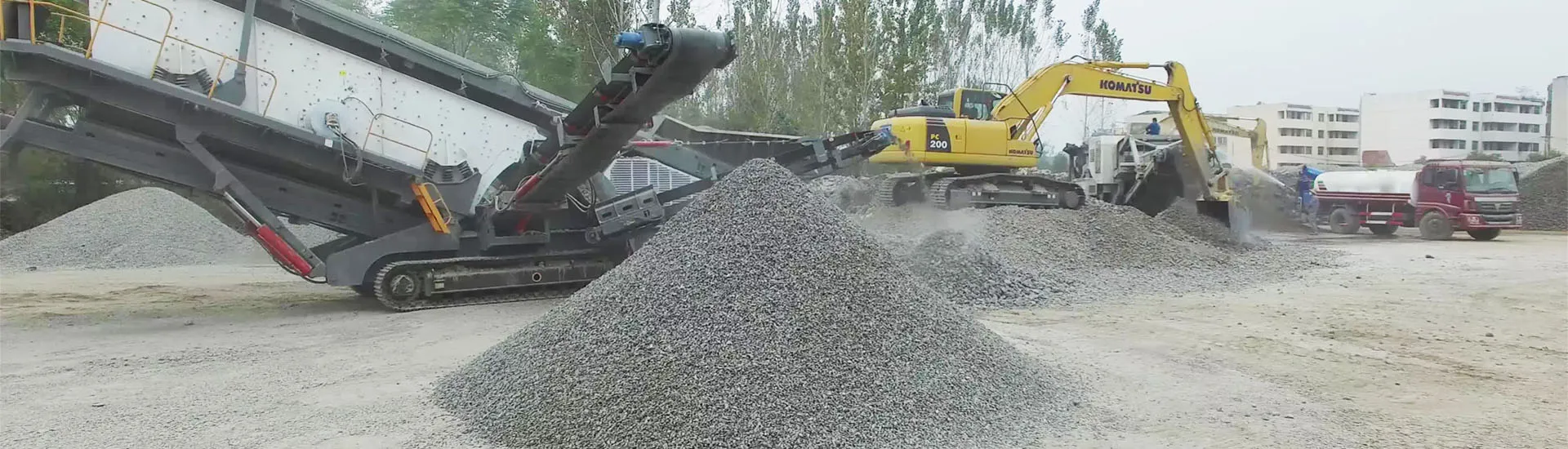
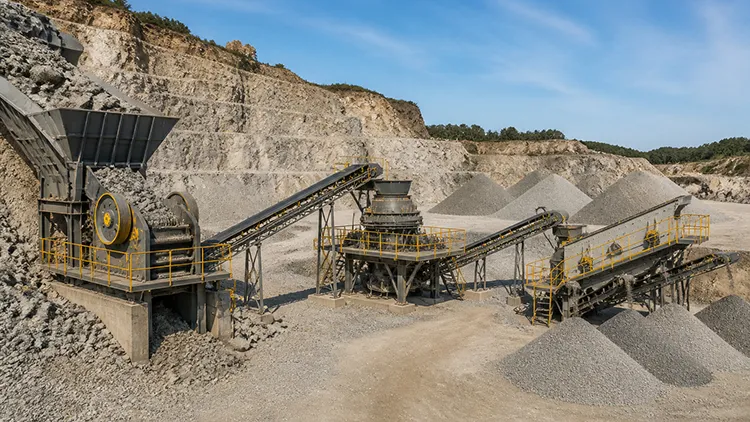
For most hard-rock quarries, the best solution is not one crusher but a correctly balanced circuit. A jaw crusher is usually selected for primary reduction of large blasted rock. A cone crusher is commonly used for secondary or tertiary crushing when the feed is abrasive and the target product requires controlled sizing. An impact crusher can be suitable when aggregate shape and a higher reduction ratio are important, but the rock’s abrasiveness must be evaluated first. A mobile crushing plant is often preferred when the quarry face moves, the project is temporary, or transport and setup time strongly affect operating cost.
The correct selection depends on five measurable inputs: feed size, rock hardness and abrasiveness, required capacity, final product sizes, and the number of hours the plant must operate each day. Start with those inputs rather than choosing equipment by nameplate capacity alone.
Practical rule: design the complete crushing and screening circuit around the required saleable products. A crusher that looks inexpensive at purchase can become expensive if it creates too much waste, wears quickly, or cannot maintain the required product grading.
Suggested placement: square cover image. Keep the image free of baked-in text so the page title can be localized and updated independently.
What should you check before selecting a quarry crusher?
1. Define the feed material
Record the rock type, compressive strength if available, moisture, clay content, maximum feed size and abrasiveness. Granite, basalt and other hard rocks can impose very different wear patterns from limestone or recycled concrete. The feed should be described with actual site data, not only a general label such as “hard stone.”
Also check the blasting result. Oversized boulders can overload the primary stage, while excessive fines can reduce the usable capacity of some circuits. A representative sample and a clear feed gradation are more useful than a nominal material description.
2. Define the required products
List each saleable fraction, such as a coarse base material, intermediate aggregate, manufactured sand or a specific road and concrete grading. The final products determine the number of crushing stages, screen decks, recirculation loops and conveyor routes.
If the plant must produce several sizes at the same time, screen efficiency and stockpile management are just as important as the crusher itself. The goal is saleable output, not simply tons entering the machine.
3. Calculate capacity from the project requirement
Use the required saleable tons per hour, operating schedule, utilization and expected waste factor. Keep a distinction between:
Nominal throughput: the manufacturer’s stated operating range under defined conditions.
Usable plant capacity: the saleable output after screening, recirculation, downtime, material variation and quality requirements.
A plant rated for a high number of tons per hour may still miss the project target if the screen is blinded, the circuit is poorly balanced or the desired fraction is too small.
4. Decide whether the plant should be fixed or mobile
Choose a fixed plant when the quarry has a long operating horizon, stable infrastructure and a justified return on civil works. Consider a mobile jaw, cone or impact plant when the working face changes, the project is temporary, or the equipment must move between sites.
Mobility can reduce relocation and transport requirements, but it does not remove the need for a proper feed hopper, conveying plan, stockpile area, power strategy, maintenance access and dust-control measures.
Jaw vs. cone vs. impact crusher for hard rock
This table is a starting point, not a substitute for an application review. The same crusher type can perform very differently depending on chamber design, closed-side setting, speed, feed distribution, liner profile and screening configuration.
When is a jaw crusher the right primary crusher?
A jaw crusher is often the first stage when the feed contains large blasted rock. It provides a straightforward way to reduce the feed before secondary crushing. For a hard-rock quarry, confirm the inlet opening, maximum feed dimensions, desired reduction ratio, CSS range, power requirement and access for wear-part replacement.
The jaw crusher should be matched to the upstream drilling and blasting pattern. If the feed is consistently oversized, the entire plant may experience blockages or lower utilization. If the feed contains too many fines, the circuit may need scalping or a different feed arrangement before the primary chamber.
When is a cone crusher better for granite or basalt?
A cone crusher is commonly considered when the circuit needs controlled reduction of abrasive rock after primary crushing. It is particularly useful when the final product grading must be consistent and the plant operates in a closed circuit with a screen and recirculating oversize.
Before selecting a cone crusher, review the feed gradation, target products, CSS, operating speed, power stability and chamber profile. Wear parts are not a minor afterthought. Metso’s aggregates guidance notes that feed type, feed grading, desired product grading, CSS and operating speed all influence crusher performance and wear behavior.
For this reason, compare the total cost per saleable ton rather than only the initial price of the chamber or liner set. A profile that produces the required grading with stable power and acceptable wear can be more economical than a lower-priced option that causes frequent replacement or excess recirculation.
When should you consider an impact crusher?
An impact crusher may be appropriate when the application values a high reduction ratio or a more cubical aggregate shape and the feed is within the machine’s suitable abrasiveness range. It should not be selected solely because the brochure shows a high reduction ratio.
For very abrasive hard rock, evaluate rotor, blow-bar and liner wear, maintenance intervals, operating cost and the actual quality specification. A technical comparison should include a representative material test or application review whenever the feed characteristics are uncertain.
When is a mobile crushing plant the better investment?
A mobile plant can make sense when the quarry face moves or when a contractor needs to deploy equipment across several projects. The decision should include transport cost, setup time, required production duration, access roads, power availability, maintenance logistics and the cost of moving a fixed spread.
Mobile equipment is not automatically lower-cost. The right comparison is the total project cost, including relocation, fuel or electricity, labor, wear parts, downtime, screening and conveying. RUBBLE MASTER’s natural-rock application information, for example, positions mobile jaw and impact plants together with screens and conveyors as a complete site solution rather than as isolated machines.
Suggested placement: process explanation image under the crusher comparison section.
How do wear parts and settings affect the real cost per ton?
A crusher’s purchase price is only one part of the economic decision. Track at least these operating indicators:
saleable tons per hour;
percentage of desired product versus waste or recirculation;
cost of wear parts per saleable ton;
energy or fuel consumption per saleable ton;
unplanned downtime and liner-change time;
screen efficiency and final product compliance.
Metso reports that the crushing circuit is the revenue-producing part of the operation and emphasizes the effect of utilization, saleable product share and crushing capacity on profitability in its aggregates guidance. The exact result will vary by quarry, but the decision principle is portable: optimize the circuit’s saleable output and stability, not only the cheapest individual component.
A practical crusher selection checklist
Before requesting a quotation from Sanming Machinery or another equipment supplier, prepare the following brief:
Rock type and representative feed sample;
maximum feed size and feed gradation;
hardness and abrasiveness information, if available;
target tons per hour and operating hours per day;
required final fractions and quality standard;
fixed or mobile plant requirement;
power source and site constraints;
expected relocation frequency;
maintenance and spare-parts plan;
required delivery date and budget range.
Ask suppliers to state the conditions behind the capacity number. A useful quotation should identify the assumed feed, setting, product grading, screen configuration and expected recirculation. It should also separate equipment price from installation, commissioning, freight, wear parts and optional accessories.
How should this article be optimized for Google AI Overviews, AI Mode and Gemini?
Google’s current Search Central guidance says that the same fundamentals that help content perform in ordinary Google Search remain important for generative AI features. The page should therefore provide original, expert-led information, clear organization, accurate claims and a useful answer to the user’s actual equipment-selection problem—not a collection of repeated keyword variations.
For this article, the recommended implementation is:
Put the quick answer and the jaw/cone/impact comparison near the top;
use descriptive headings that mirror real equipment questions;
include first-hand application details, assumptions and limitations;
link to relevant equipment pages, specifications and contact routes;
add
Articlestructured data only when it accurately describes the page;add FAQ content only when the questions and answers are visible on the page;
validate structured data with Google’s Rich Results Test;
monitor queries, impressions and AI-search visibility in Search Console where the relevant reporting is available.
Structured data can help Google understand a page, but it does not replace useful content and must accurately represent the page. Do not add unsupported capacity, certifications, test results or customer claims.
FAQ: hard-rock quarry crusher selection
What is the best crusher for granite?
A common circuit uses a jaw crusher for primary reduction and a cone crusher for secondary or tertiary crushing. The final choice depends on feed size, abrasiveness, required product grading, capacity and the number of stages required.
Is a cone crusher suitable for basalt?
It can be suitable for basalt when the feed gradation, chamber, setting, power and wear profile are correctly matched. Test the application and evaluate cost per saleable ton rather than relying on crusher type alone.
Is a jaw crusher enough for a quarry?
A jaw crusher may be enough for a simple coarse-product application, but many quarries need secondary crushing and screening to meet multiple product sizes or tighter grading requirements.
Are mobile crushers cheaper than stationary plants?
Not in every project. A mobile plant may reduce civil works and relocation time, while a stationary plant may offer better economics over a long operating horizon. Compare total project cost, utilization, transport, maintenance and saleable output.
How do I compare crusher capacity figures?
Compare capacity under the same feed, setting, material, moisture, product grading, screen arrangement and utilization assumptions. Nominal throughput is not the same as saleable plant output.
How often should crusher wear parts be reviewed?
Review wear patterns, product grading, power stability, replacement intervals and cost per saleable ton regularly. A change in feed or target product can justify a different chamber or wear profile.
Does Google AI require a special GEO format for this blog?
Google’s official guidance emphasizes helpful, reliable, people-first content and strong SEO fundamentals rather than a separate guaranteed AI-ranking format. Clear answers, accurate structure, original expertise and crawlable pages are the practical priorities.
Choose a hard-rock crusher by starting with the material, product specification and saleable capacity. Use a jaw crusher when large blasted rock needs primary reduction, consider a cone crusher for controlled secondary or tertiary processing of abrasive feed, evaluate an impact crusher when shaping and reduction are central to the application, and choose mobile equipment when relocation and site flexibility materially change the project economics.
Sanming Machinery can use this information as the basis for a project-specific crushing and screening recommendation. The next step is to match the feed sample, target products, capacity and site conditions to a complete circuit—not to a single machine in isolation.