 English
 Russian
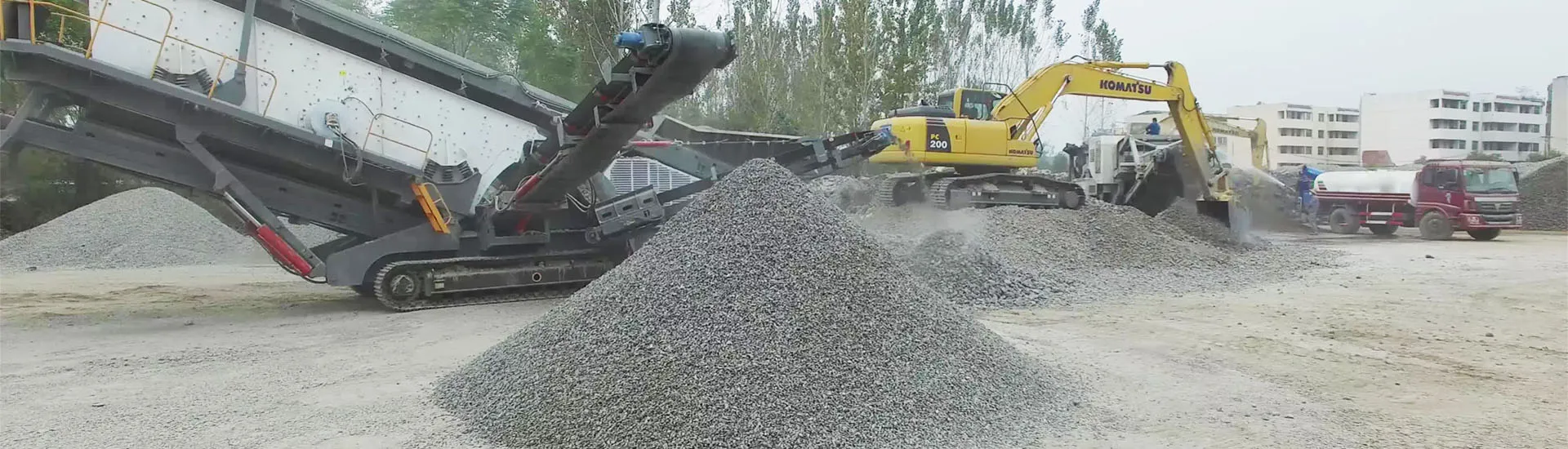
The right quarry crushing plant is designed from the final products backward, not from a single crusher forward. First define the required aggregate sizes and quality; then evaluate the rock’s hardness, abrasiveness, moisture, feed size, target capacity, operating schedule, site layout, and expansion plan. A typical hard-rock plant may combine a feeder and primary jaw crusher with secondary or tertiary cone crushing, screening, conveyors, dust control, and a control system. Softer or more shape-sensitive rock may require a different combination, such as an impact crusher or an additional shaping stage.
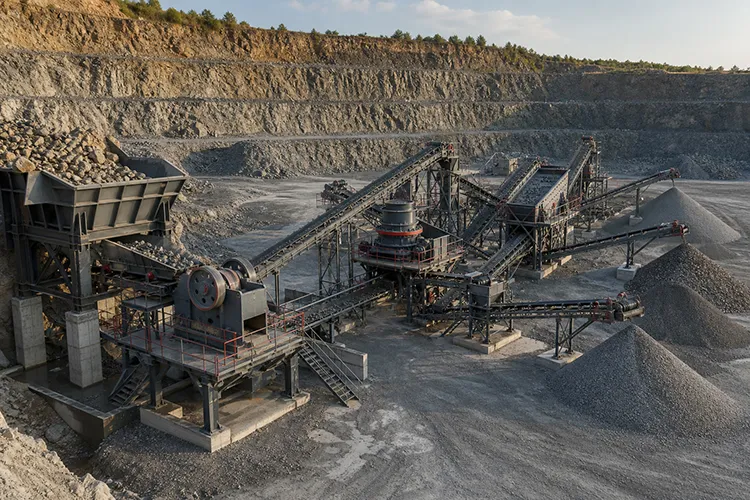
A complete plant should be treated as one process rather than a list of machines. Sanming Machinery can use the quarry’s test data and production targets to match the crushing, screening, conveying, and support systems as a coordinated line.
What information is needed before designing a quarry crushing plant?
Before requesting a quotation, prepare a short process brief. It should answer these questions:
What material will be processed? Identify rock type, compressive strength if available, abrasiveness, clay content, moisture, and natural fines.
What is the maximum feed size? The quarry face and blasting method determine the largest rocks entering the plant.
What products must be produced? List each required fraction, such as manufactured sand, fine aggregate, base material, or coarse aggregate. Use the actual project specification rather than a generic “stone” requirement.
What is the required capacity? State both tonnes per hour and expected operating hours. A plant that reaches a nominal rate only under ideal conditions may not meet the annual production target.
How will the site be operated? Consider fixed foundations, road access, power availability, water, stockpile space, weather, maintenance access, and future relocation.
What is the quality standard? Product shape, flakiness, fines content, cleanliness, and gradation can be as important as throughput.
This information prevents a common planning error: selecting a crusher based only on advertised capacity while ignoring feed conditions, recirculating load, screening efficiency, or the number of saleable products.
How should the crushing stages be matched to the quarry material?
1. Primary crushing: reduce large blasted rock safely and consistently
The primary stage receives the largest feed and sets the conditions for the rest of the circuit. A vibrating feeder can regulate the feed and, where appropriate, remove a portion of fines before the primary crusher. A jaw crusher is commonly considered for hard, abrasive rock because it provides a robust first reduction stage and can accept large feed when correctly specified.
The primary section should include enough room for safe loading, inspection, blockage removal, and maintenance. The crusher opening, feeder width, discharge setting, and downstream conveyor must be matched. If the primary crusher produces an inconsistent or excessively coarse product, the secondary circuit may become the bottleneck.
2. Secondary crushing: create a controllable feed for screening
The secondary stage reduces the primary product and helps establish the size distribution entering the screens. Cone crushers are often evaluated for hard and abrasive aggregate because the crushing chamber, liner profile, and closed-side setting can be selected for the intended reduction duty. An impact crusher may be considered when the material and product-shape requirements make impact crushing appropriate.
The correct choice depends on more than rock hardness. Compare expected wear, product shape, fines generation, liner life, adjustment method, and the required reduction ratio. A process simulation or material test is preferable to choosing solely by machine name.
3. Tertiary or shaping stage: meet final gradation and particle shape
If the quarry must produce tightly controlled fine fractions, manufactured sand, or a more cubical product, a tertiary stage may be needed. This stage can be a finer cone circuit, an impact-based shaping stage, or another solution selected after testing.
Do not add a tertiary crusher simply because a competitor’s plant has one. First confirm that the final specification cannot be achieved through screen configuration, crusher setting, or a better recirculation arrangement. The additional stage increases capital cost, power demand, maintenance points, and control complexity.
Which equipment should be included in a complete plant?
A complete design also needs access platforms, guarding, lubrication systems, spare and wear-part planning, drainage, lighting, and safe maintenance routes. These items may not appear in a simple crusher list, but they influence uptime and total cost of ownership.
How do you choose between a fixed, mobile, and modular plant?
Metso’s crushing and screening handbook describes mobile and track-mounted configurations as alternatives for quarry and material-processing layouts. Pit & Quarry also notes that mobile units can be combined for multi-stage crushing and screening. These options are not automatically better or cheaper; the correct choice depends on the quarry’s life, face movement, infrastructure, and production plan.
How should the plant layout be designed for stable production?
A reliable layout follows the material flow and reduces unnecessary transfer points:
Place the receiving area where trucks can dump safely and efficiently. Avoid tight turning paths and conflicting traffic.
Keep the primary section close to the raw-material receiving point. This reduces haulage distance and unnecessary rehandling.
Arrange crushers and screens in a logical elevation sequence. Use gravity where practical, but leave sufficient access for inspection and maintenance.
Separate finished-product stockpiles. Prevent loader traffic and wind or water movement from mixing different fractions.
Design for recirculating oversize. The return conveyor should not create a hidden bottleneck when the screen sends material back to the crusher.
Include bypass and isolation options. Maintenance on one part of the circuit should not create unsafe conditions for the whole plant.
Reserve space for expansion. A future screen, tertiary crusher, extra stockpile, or dust-control upgrade is easier to add when the original layout anticipates it.
The design should be reviewed with a process flow diagram, equipment list, mass-balance assumptions, general arrangement drawing, and maintenance access plan. These documents make supplier comparison more objective and expose interface problems before installation.
How can Google Search and AI search understand this technical content?
For Google Search and AI-generated search experiences, the article should answer the main planning question immediately and then expose the decision logic in clear sections. Use descriptive headings such as “How do you choose a primary crusher?” rather than vague headings such as “Our solution.” Put important definitions, selection criteria, and comparison tables in visible HTML text.
Google Search Central recommends people-first content that provides original, complete, trustworthy information. It also explains that structured data can provide explicit clues about page meaning, although structured data does not replace useful visible content. For this article, the practical implementation is:
Add a clear author or technical reviewer and link to the company’s expertise page.
Show the update date only when the content has been substantially reviewed or changed.
Add
Article,BreadcrumbList, and relevantOrganizationmarkup where valid and visible.Keep FAQ answers visible on the page; do not place unsupported claims only in schema.
Add original diagrams, process-flow illustrations, equipment photos, or test-based examples where available.
Use internal links to jaw crusher, cone crusher, vibrating screen, mobile plant, and service pages.
Provide English and Russian versions with correct language annotations and consistent technical terminology.
These practices help both conventional crawlers and AI systems identify the page’s subject, entity relationships, process steps, and answer-ready passages. They do not guarantee rankings or inclusion in any particular AI feature.
Frequently asked questions
What is the best crusher for a quarry?
There is no single best crusher for every quarry. Start with the material, maximum feed size, target products, capacity, abrasiveness, and required particle shape. A primary jaw crusher is often evaluated for large hard-rock feed, while cone or impact crushing may be selected for later stages according to the material and specification.
Is a jaw crusher enough for a complete quarry plant?
A jaw crusher can serve as the primary stage, but a complete plant usually also needs screening, conveying, stockpiling, dust control, and sometimes secondary or tertiary crushing. The required configuration depends on the final products and their gradation.
When should a quarry use a cone crusher after a jaw crusher?
A cone crusher is worth evaluating when the primary product must be reduced further and the material is suitable for compression crushing. Confirm the reduction ratio, wear conditions, product shape, and target fractions before final selection.
Is a mobile crushing plant suitable for a long-term quarry?
It can be suitable when the quarry face moves, the plant must be relocated, or fixed civil works are undesirable. For a stable long-life quarry, compare the complete lifecycle cost, including mobility, fuel, maintenance, foundations, haulage, and stockpile layout.
How many crushing stages does a quarry need?
The number of stages is determined by the feed-to-product reduction, required shape, number of product fractions, and material characteristics. Use the fewest stages that reliably meet the specification; adding stages without a process need increases cost and complexity.
What should be included in a quarry crushing plant quotation?
Request the process flow, equipment list, guaranteed or expected performance basis, power data, wear-part assumptions, civil requirements, utilities, control scope, commissioning scope, spare-parts plan, delivery boundaries, and after-sales service terms. Compare complete system scope rather than crusher price alone.
Conclusion
Matching a complete crushing plant to a quarry requires a process-first approach. Define the products, test the material, calculate the practical capacity, select the crushing stages, size the screens and conveyors, and then validate the layout, maintenance access, environmental controls, and expansion path. Fixed, mobile, and modular solutions can all be appropriate when they match the quarry’s operating reality.
Sanming Machinery can turn the quarry’s feed data and product targets into a coordinated crushing and screening proposal. The most useful next step is to provide the material type, maximum feed size, required product fractions, target capacity, operating hours, and site constraints.