 English
 Russian
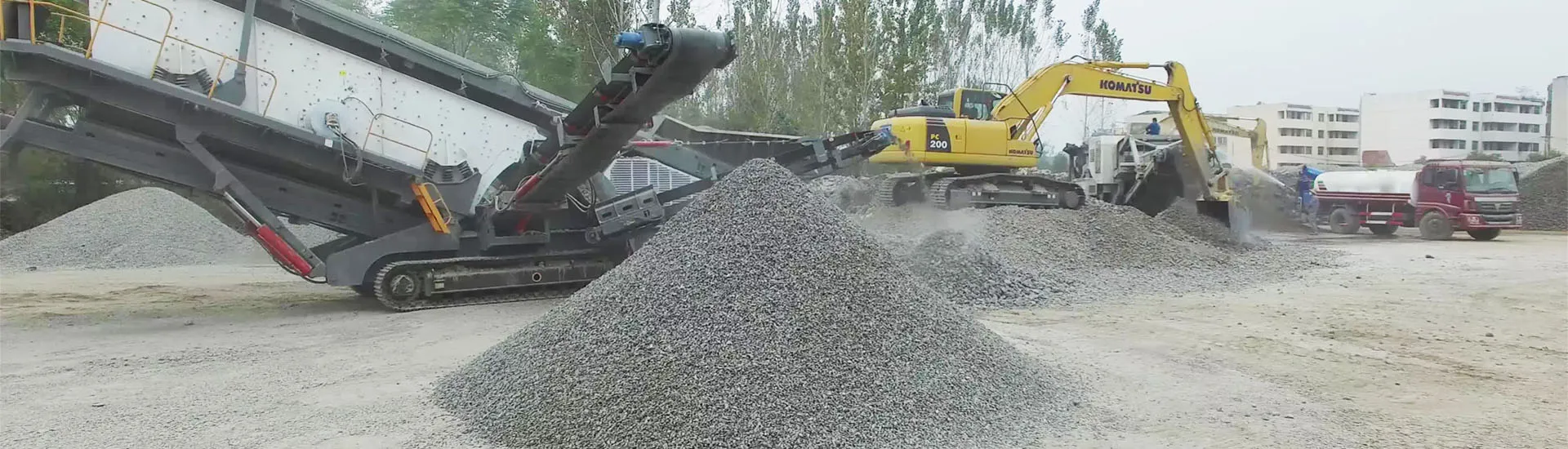
For most quarry and small-to-medium mining operations in Africa, this is not a machine-versus-machine question. It is two numbers: how long the site lasts, and how far the rock has to travel. If your pit, contract or road package moves within roughly 24 months — or you crush at more than one site per year — a mobile plant usually wins on cost per ton. If you have five or more years of reserves, dependable grid power, and steady contract tonnage above about 150–200 t/h, a fixed plant wins.
Everything below is the reasoning and the arithmetic behind that rule of thumb, so you can run the numbers on your own site instead of trusting a generalisation.
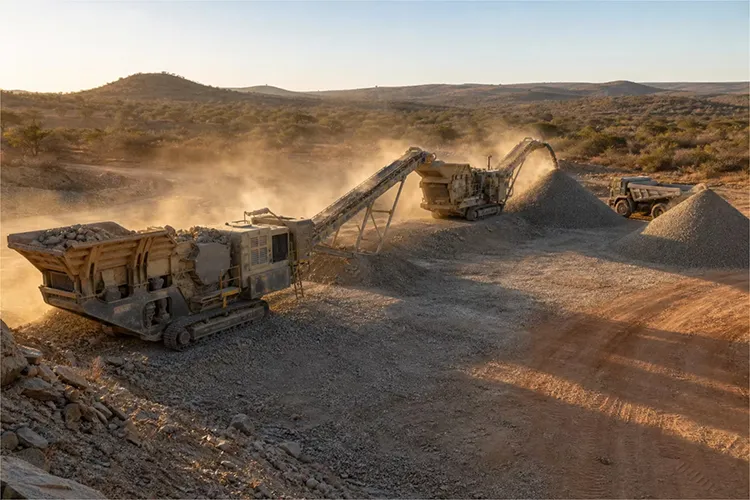
What actually decides cost per ton in Africa?
Most buyers compare purchase price. Purchase price is rarely the deciding factor. On African sites, five cost lines move the answer more than capital cost does:
Diesel and power. A diesel-driven plant carries fuel as a per-ton cost forever. A grid-connected plant converts that into a much smaller electricity line — but only where the grid is dependable enough to plan around.
Relocation and mobilisation. Moving a fixed plant means new civils, new foundations and weeks of lost production. Moving a tracked plant means a low-loader and days.
Wear parts and parts lead time. Manganese liners, jaw plates, screen media and conveyor belting are consumed per ton crushed. What hurts is not the price of the part — it is the weeks of downtime while it clears customs.
Site life and contract structure. A three-year road package and a fifteen-year granite reserve demand opposite equipment decisions.
Labour and skills. A fixed plant with multiple conveyors, transfer points and a control room needs a bigger, more specialised crew than a single tracked unit operated by one competent operator.
Material handling is the hidden one. Rock that has to be trucked from the face to a central plant is paid for twice — once in fuel, once in the load-and-haul fleet. Crushing at the face removes that cost entirely. This is the single strongest argument for mobile crushing in African conditions, and it is why the choice is really about matching plant mobility to where the rock is.
For context on how tight crushing margins actually are, one 2026 cost-benefit analysis puts well-run aggregate crushing operations at roughly 15–30% EBITDA margin, with custom crushing services at 20–40% (Oro Mineral, July 2026). At those margins, an extra dollar per ton of diesel or an extra three weeks of downtime is not a detail — it is the difference between a profitable and an unprofitable contract.
Where a mobile crushing plant wins in African conditions
When the material moves, the plant should move with it. A tracked or wheeled plant follows the face, the stockpile or the road package. That eliminates the haul, the civils, and the months of construction.
Mobile wins when:
Site life is short or the pit is advancing. Alluvial and small-scale gold operations, lithium and manganese prospects, and short road or rail packages all relocate. A tracked plant can be on a low-loader and running at the next site within days.
Several small sites beat one big one. Contract crushers serving multiple clients per year effectively amortise one machine across several revenue streams instead of building a plant per site.
There is no dependable grid. A diesel plant needs no substation, no transformer, no connection fee and no waiting list.
You need production this quarter. A tracked unit arrives as a complete machine, is commissioned on site and starts producing. A fixed plant has to be designed, founded, built and wired first.
Only one operator is available. A single tracked jaw unit with an integrated feeder and side conveyor is a genuinely small operating requirement.
A concrete example of this class of machine is a compact tracked jaw unit such as the HTJC-510, which pairs a Laidong 385 (EU Stage V) diesel engine at 19 kW with a 0.4 m³ hopper, 230 × 380 mm maximum feed size and 5–10 t/h output. That is not a high-tonnage machine and it is not meant to be — it is the size class that suits small-scale gold and lithium operations, start-up quarrying, and site-based recycling where the economics live in mobility and low operating overhead, not in tonnage.
The trade-off is real, though: smaller feed opening, lower tonnage, higher fuel consumption per ton, and a shorter component life than a heavy fixed installation. Mobile is not a cheaper way to crush 400 t/h. It is the cheapest way to crush 20–150 t/h at a site that will not stay still.
Where a fixed crushing plant wins
When the tonnage is steady and the site is permanent, fixed wins on almost every per-ton line except mobilisation.
Fixed wins when:
Reserves justify long life. Five or more years of quarry face, or a long-term mining licence, lets you amortise foundations, civils and a power connection over millions of tons.
Grid power is available and affordable. Converting diesel cost into electricity cost is the single largest per-ton saving available to a crushing operation.
You need high tonnage. Above roughly 150–200 t/h of continuous demand, a proper multi-stage fixed circuit — primary jaw, secondary cone, tertiary cone or VSI, plus screening and stockpiles — gives better product shape control, better gradation consistency and lower maintenance cost per ton than a chain of small mobile units.
Product specification is strict. Aggregate for structural concrete, ballast, or a specification aggregate with a tight flakiness index is easier to hold consistently on a fixed circuit with proper surge control than on a plant that moves.
You can keep spares on site. A fixed plant justifies a full spare-parts store, which is where the real per-ton saving compounds.
The hidden risk with fixed plants in Africa is not capital cost — it is the assumption of stability. Fixed plants get built for a pit that turns out to be smaller than the drilling suggested, or for a contract that is renewed at a lower rate, or on a grid feeder that turns out to be unreliable. Once the foundations are poured, that decision is expensive to reverse.
Mobile vs fixed: side-by-side comparison
Read it as a boundary, not a scoreboard. The crossover sits roughly where site life, power availability and tonnage all point the same way.
How to decide in 6 steps
Run these in order. The first step that comes out clearly usually settles the decision.
Fix the site life. Write down how many years of material you actually have, and how many of those years are contracted. Under 24 months of contracted work, weight mobile heavily.
Fix the real throughput. Not nameplate capacity — the tonnage you must produce per shift, on the days the site actually works. Include wet-season downtime.
Map the material movement. Distance from face to plant, and whether the face advances. Over about 1 km of regular haul, crushing at the face usually beats trucking to a central plant.
Check the power reality. Is there a grid connection, what is its reliability, what does a connection cost, and what does a litre of diesel cost delivered to site? Multiply diesel litres per hour by your real operating hours — not a nominal 8-hour day.
Price the wear-parts supply chain. Get the actual lead time for jaw plates, cone liners and screen media to your site, door-to-door, including clearance. Multiply by the cost of a day of lost production. This number frequently decides the choice on its own.
Check the skills you can actually hire. If you cannot staff a fixed plant's shift crew reliably, its theoretical per-ton advantage will not materialise.
Only after those six should you compare quotations.
Mistakes that cost African buyers the most
Buying a fixed plant for a temporary site. The most expensive version of this mistake is pouring foundations for a pit whose reserves were estimated from insufficient drilling.
Sizing a mobile unit too small on the feed opening. A tracked jaw that cannot accept the blast fragmentation you actually produce will spend its life bridged and stopped. Maximum feed size must match your blasting practice, not your budget.
Ignoring the diesel line in the business case. Fuel is a per-ton cost for the entire life of a mobile plant. It belongs in the model from day one.
Treating parts lead time as a purchasing problem instead of a production risk. A wear part that takes six weeks to arrive is a six-week production outage unless you hold stock.
Skipping dust and noise control at design stage. Retrofitting suppression to a working plant costs more and stops production while you do it.
No weighbridge or belt scale. Without measured tonnage you cannot know your own cost per ton, and you cannot manage what you cannot measure.
Assuming one machine does every job. Primary reduction and shaped, correctly graded product are different jobs. Budget for the circuit you actually need.