 English
 Russian
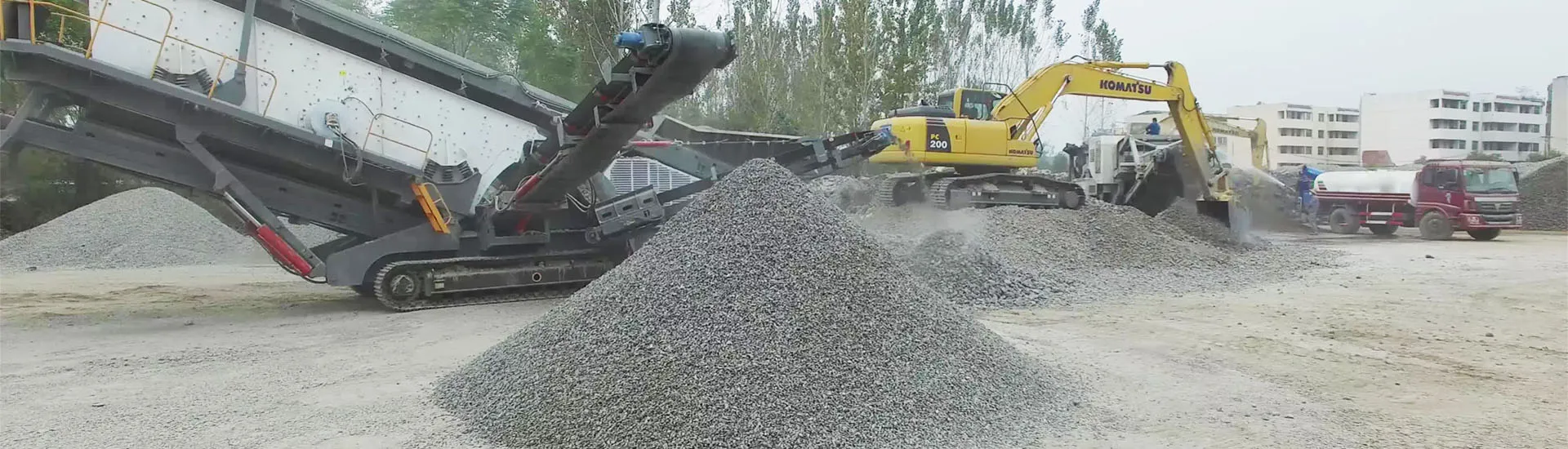
In high-capacity quarrying and mining operations across Africa, equipment downtime caused by severe material jamming directly degrades total output. Unplanned stoppage not only damage internal mechanical components but also rapidly escalate operational expenditure. Maintaining peak crushing throughput requires structural preventative maintenance, precise feed control, and strategic component selection.
Understanding the Root Causes of Feed Jamming
Uncontrolled feed sizing, high clay moisture content, and improper chamber loading are the primary drivers of blockages in crushers. When sticky overburden or oversized granite chunks bridge the receiving hopper, feed choke occurs, causing motor overload and hydraulic strain.

Critical Operational Variables & Benchmark Metrics
To maintain stable flow within a heavy-duty Crusher Plant, site engineers evaluate several baseline parameters:
Feed Sizing Ratio: Maximum feed size should not exceed 80% to 85% of the gape opening in a primary Rock Crusher.
Moisture Content Limit: Feed moisture above 6% dramatically increases bridging risks in secondary crushing chambers.
Choke Level: Maintaining a 100% full chamber in a Cone Crusher ensures maximum particle-on-particle crushing, reducing localized mantle wear.
Equipment Selection: Jaw Crusher vs. Cone Crusher vs. Mobile Crusher
Selecting the correct Mining Machinery depends directly on raw material hardness, feed size, and mobility requirement.
| Machine Type | Primary Role | Ideal Feed Hardness | Output Size Range | Key Advantage |
| Jaw Crusher | Primary Reduction | High (Granite, Basalt) | $100\text{ mm} - 300\text{ mm}$ | Deep crushing chamber, heavy flywheel |
| Cone Crusher | Secondary/Tertiary | High to Medium | $10\text{ mm} - 40\text{ mm}$ | Cubical aggregate shape, hydraulic tramp release |
| Mobile Crusher | On-site Processing | Variable | Flexible | Zero foundation cost, rapid site transfer |
Practical Checklist to Prevent Material Jamming
[ ] Install Vibrating Grizzly Feeders: Pre-screen fine soil and mud under $20\text{ mm}$ prior to primary jaw reduction.
[ ] Monitor Motor Current (Amperage): Interlock feeder speed automatically when jaw drive motors reach $90\%$ maximum load.
[ ] Inspect Manganese Wear Parts: Replace liners before wear reaches $80\%$ of total thickness to avoid chamber deformation.
[ ] Deploy Hydraulic Tramp Release: Ensure secondary stage equipment automatically opens under uncrushable iron ingress.
For technical specifications, customized project planning, or replacing high-wear components, consult the technical team at
FAQ Section (Structured for Search Snippets)
Q1: What causes frequent blockages in crushers during quarrying?
A: Main causes include oversized feed exceeding 85% of the machine gape, high clay or moisture content exceeding 6%, and uneven feed rate distribution that bridges the intake hopper.
Q2: How do you choose between a stationary Crusher Plant and a Mobile Crusher?
A: Stationary plants suit long-term, high-tonnage mining projects exceeding 5–10 years. Mobile crushers suit multi-site quarrying, road construction, or terrain with zero concrete foundation infrastructure.
Q3: Which Wear Parts wear out fastest in a Stone Crusher?
A: Jaw plates (moving and fixed) in jaw units, and mantles and bowl liners in cone units experience the highest abrasive wear, requiring high-manganese alloy composition.