 English
 Russian

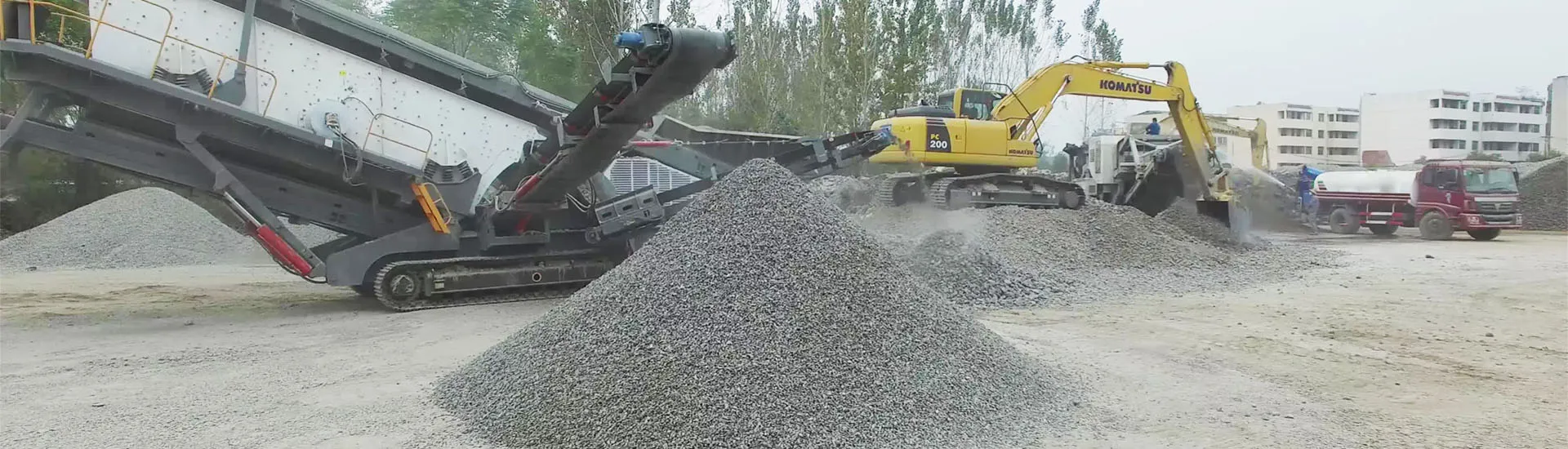
In primary crushing circuit design, selecting between a heavy-duty primary jaw crusher and a primary horizontal shaft impactor (HSI) represents one of the most critical Capex-to-Opex tradeoffs for quarry operators and mining contractors. While both machines can accept run-of-mine (ROM) boulder feeds exceeding 800 mm to 1,000 mm, their fundamental reduction mechanisms—continuous mechanical compression versus high-speed dynamic impact—dictate vastly different operating envelopes regarding rock abrasiveness, fines generation, aggregate flakiness, and wear consumable economics.

1. Rock Abrasiveness and Compressive Strength Limitations
The decisive geological threshold separating jaw and impact applications is rock abrasiveness, typically measured by the Cerchar Abrasiveness Index (CAI) or Bond Abrasion Index (Ai), alongside Unconfined Compressive Strength (UCS):
High-Abrasion & Hard Rock (UCS > 180 MPa, Ai > 0.25): For abrasive geological formations—such as granite, basalt, quartzite, and iron ore—the primary jaw crusher remains uncontested. Compressive crushing at low peripheral speeds generates minimal sliding friction across manganese wear surfaces, ensuring economic liner consumption.
Low-to-Medium Abrasion Formations (UCS < 150 MPa, Ai < 0.12): In massive limestone, dolomite, gypsum, and clean sandstone deposits, primary horizontal impact crushers demonstrate unmatched single-pass reduction ratios (up to 15:1 to 20:1 compared to 4:1 to 6:1 for jaw crushers). A single primary impactor can frequently eliminate the secondary crushing stage entirely, dramatically lowering plant structural capital expenditure.
2. Aggregate Cubicity and Flakiness Index
Downstream asphalt concrete and high-strength structural specifications impose strict limits on the Flakiness Index (FI) and Elongation Index (EI) of coarse aggregates:
Jaw Crusher Discharge Profile: Compressive fracture along natural geological cleavage planes often produces elongated, slabby oversize fractions when processing laminated or schistose rocks, requiring closed-circuit tertiary tertiary cone or vertical shaft impactors (VSI sand making machines) for cubical shaping.
Impact Crusher Product Quality: High-velocity kinetic impact shatters rocks along internal micro-fissures and crystalline grain boundaries. The resulting product exhibits superior cubical particle morphology with a Flakiness Index consistently under 10% to 12%, achieving ready-mix concrete standards directly from the secondary screening deck.
3. Wear Part Consumption and Operating Cost (OPEX)
Operating expenditure disparities between the two platforms stem almost exclusively from wear part replacement frequency and down-time costs:
| Operating Metric | Primary Jaw Crusher (PE / CJ Series) | Primary Impact Crusher (CI Series) |
|---|---|---|
| Primary Wear Elements | Fixed and Movable Jaw Plates (Mn18Cr2) | High-Chrome Alloy Blow Bars & Impact Curtains |
| Wear Cost in Granite ($/ton) | $0.06 - $0.12 / ton | $0.45 - $0.90 / ton (Prohibitive blow bar wear) |
| Wear Cost in Limestone ($/ton) | $0.02 - $0.04 / ton | $0.03 - $0.06 / ton (Balanced by circuit reduction) |
| Tramp Metal Vulnerability | Protected by ductile iron toggle plate shear | Severe risk of catastrophic rotor/blow bar fracture |
4. Technical FAQ: Common Circuit Design Questions
Q1: Can a primary impact crusher process recycling concrete with steel rebar?
A: While horizontal impactors are widely used in demolition recycling due to their ability to strip rebar clean from concrete aggregate, they must be equipped with hydraulic overload retraction aprons and overband cross-belt magnetic separators. Entangled structural rebar exceeding 30 mm can wedge between rotor discs and primary impact curtains, causing severe drive stall or rotor structural damage.
Q2: When is it cost-effective to replace blow bars with ceramic composite inserts?
A: In medium-abrasive feeds containing 8% to 18% silica quartz, monolithic martensitic or high-chrome blow bars suffer rapid scouring wear along their leading edge. Upgrading to metal matrix ceramic composite (MMC) blow bars triples operational lifespan between flips, yielding a net wear part cost reduction of 35% despite higher initial purchase Capex.
Q3: How does moisture and sticky clay feed affect jaw versus impact crushers?
A: Sticky, plastic quarry fines adhere rapidly inside the crushing chamber. Jaw crushers handle high-moisture feeds effectively provided a vibrating grizzly feeder scalps minus 40 mm clay prior to the jaw. Conversely, impact crushers without heated inlet chutes or open discharge grates suffer packing beneath the rotor, significantly restricting tonnage.
Custom Crushing Circuit Engineering & Sizing Support
Selecting between primary jaw and impact reduction requires rigorous ore petrography, abrasion testing, and flow-sheet mass balance modeling. Contact Sanming Machinery technical application engineers for tailored equipment layouts, rock lab testing, and direct export quotations.