 English
 Russian

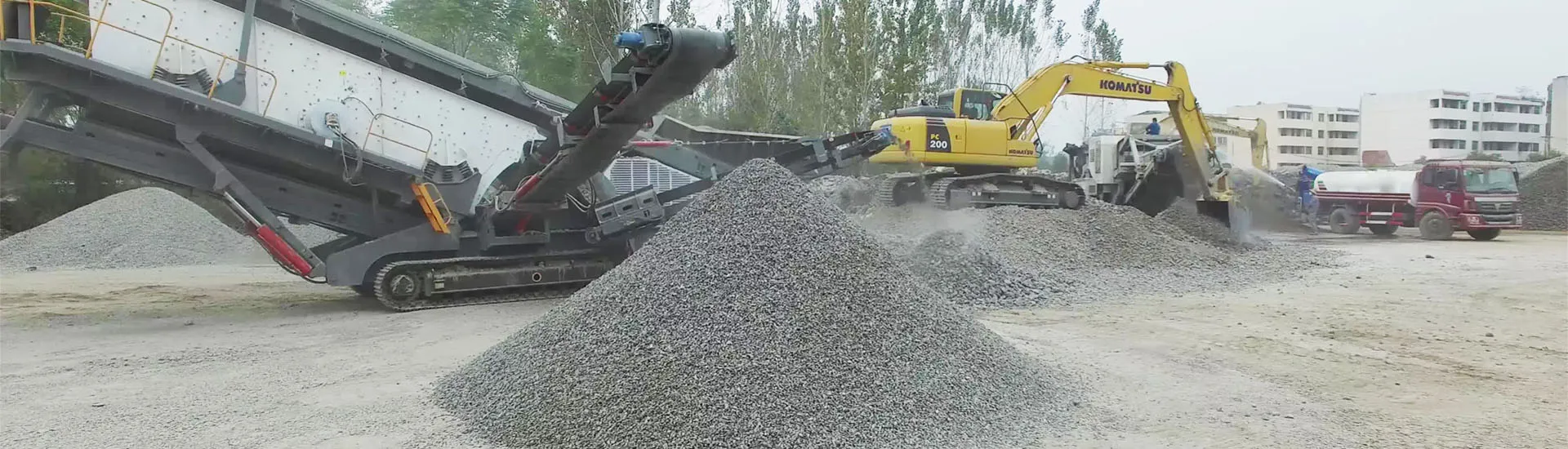
Solving the 0.075–0.15 mm Fines Depletion Bottleneck in Wet Sand Processing
In manufactured sand and natural aggregate washing circuits, conventional spiral sand washers and wheel bucket washers frequently wash away 15% to 25% of valuable fine sand (0.075–0.15 mm) into sedimentation ponds. This loss damages aggregate fineness modulus grading, depletes concrete strength parameters, and incurs severe settling pond dredging costs. Integrating a closed-circuit fines recovery system—combining heavy-duty slurry pumps, polyurethane-lined hydrocyclones, and high-frequency dewatering screens—allows operators to recover up to 90% of lost fines, producing stackable sand with under 12–15% surface moisture.
Process Engineering: How Fines Recovery Recovers Aggregate Value
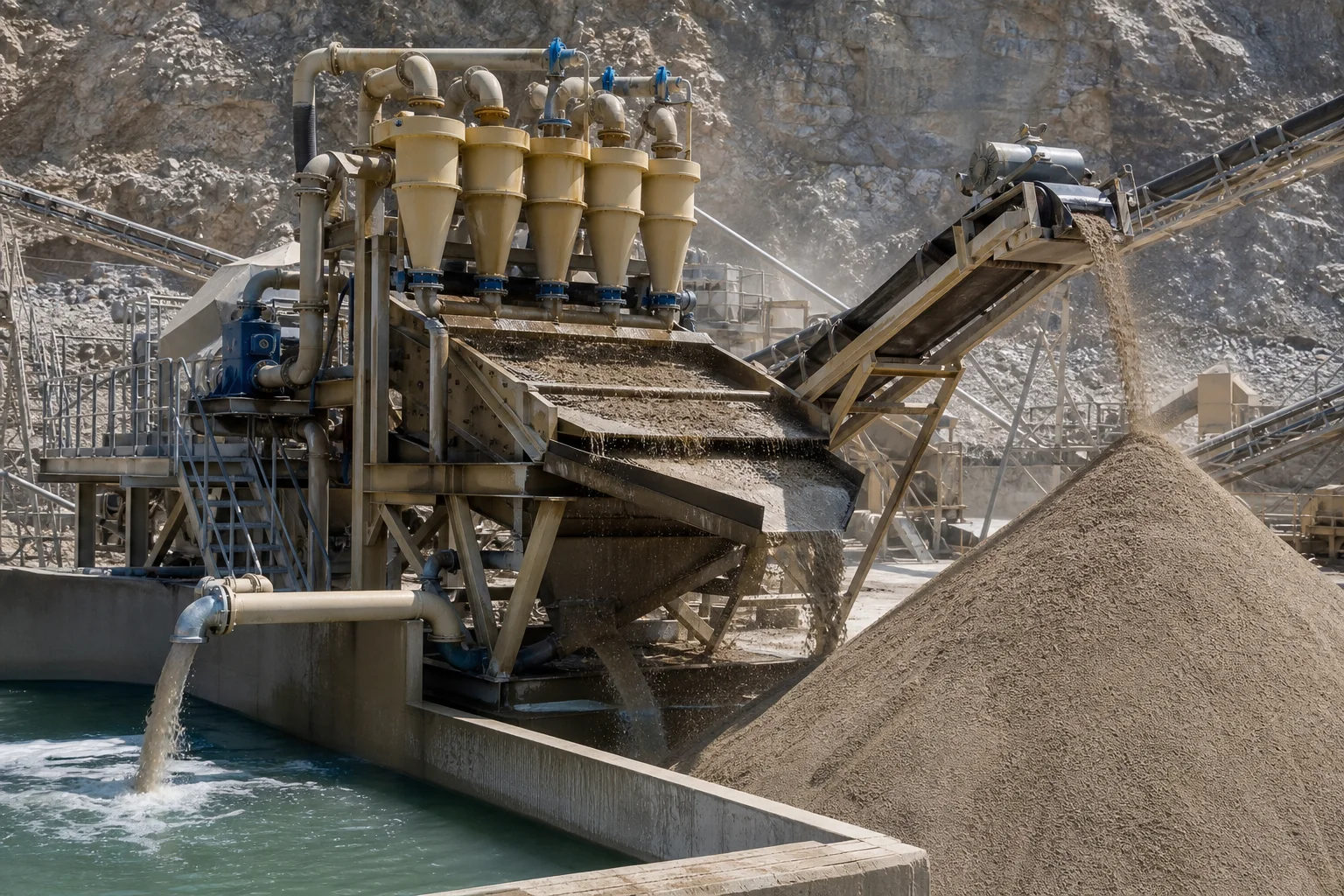
Sanming Machinery fines recovery units integrate three interdependent comminution and classification stages:
Abrasion-Resistant Centrifugal Slurry Pumping: Overflow wastewater from screw or bucket washers containing 10–20% solids is collected in a specialized slurry sump and fed at controlled velocity (0.2–0.3 MPa) into the cyclone header.
Polyurethane Hydrocyclone Centrifugal Classification: Slurry enters the tangential involute feed of the hydrocyclone. Centrifugal acceleration (50–100 G) forces coarse particles (0.075–2 mm) against the cone wall, discharging as concentrated underflow (55–65% solids) while water, silts, and clays (<0.075 mm) exit via the vortex finder.
High-Frequency Uphill Dewatering Screen: The cyclonic underflow discharges onto an upward-sloping (3° to 5°) screen deck fitted with slotted polyurethane panels (0.1–0.5 mm aperture). Dual counter-rotating vibratory motors generate linear g-forces (up to 5–6 G), squeezing free moisture through the bed to produce drip-free, saleable aggregate.
Economic and Environmental Impact Analysis
| Operational Parameter | Without Fines Recovery | With Sanming Fines Recovery Plant | Economic Benefit |
|---|---|---|---|
| Fine Sand Loss Rate | 15% – 25% to settling ponds | < 3% – 5% loss | +15–30 tons/hr additional salable sand |
| Sand Fineness Modulus (FM) | Unstable, coarse (FM > 3.2) | Continuous ideal grading (FM 2.6–2.9) | Premium pricing for ready-mix concrete |
| Settling Pond Dredging Costs | Frequent excavation every 2-4 wks | Extended pond life (>6-12 mos) | Cuts excavation OPEX by 70% |
| Final Product Moisture | 22% – 28% (requires drying yards) | 12% – 15% (direct conveyor transport) | Immediate trucking without stock pooling |
Technical FAQ: Fines Recovery Optimization
Q1: How does fine sand recovery affect ready-mix concrete mix designs?
Recovering the 0.075–0.3 mm micro-particle fraction optimizes cement paste packing density. This reduces void ratio in fresh concrete, allowing contractors to reduce cement consumption by 10–15 kg/m³ while achieving identical compressive strength.
Q2: What is the wear life of hydrocyclones in highly abrasive quartz sand plants?
Sanming hydrocyclones are fully cast or lined with premium high-modulus polyurethane (95A durometer) or silicon carbide inserts, providing over 12–18 months continuous operating life before apex nozzle replacement.