 English
 Russian

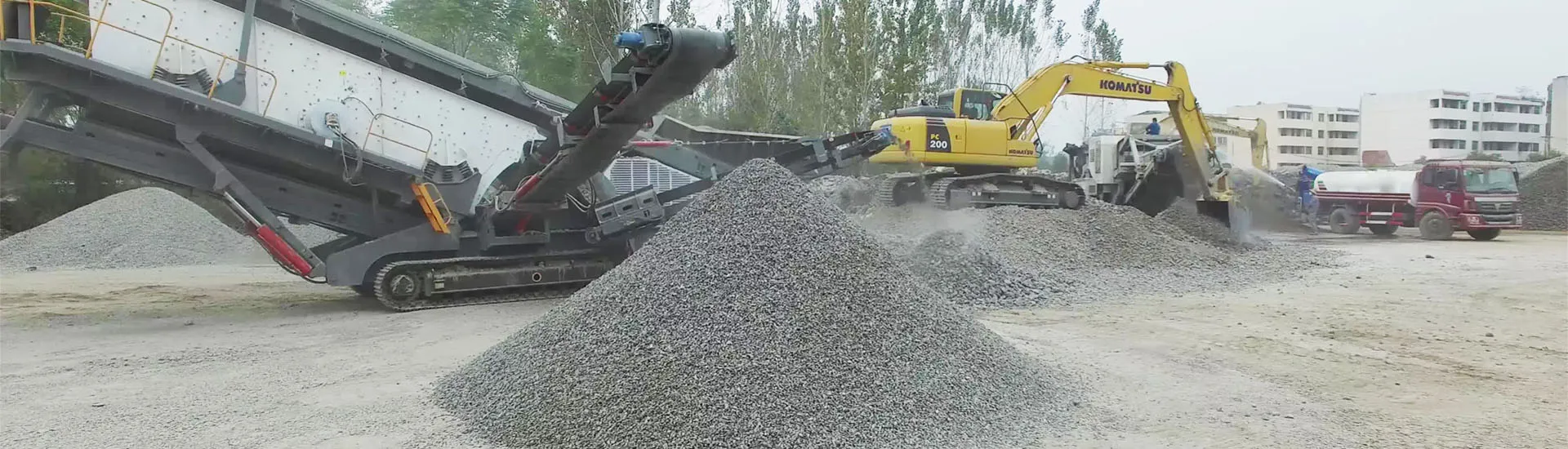
The Engineering Dilemma in Tertiary Aggregate Shaping and Sand Production
In high-specification road construction and high-performance concrete production, strict flakiness and elongation limits (flakiness index below 10–15%) require specialized aggregate shaping equipment. Quarry plant designers frequently evaluate two competing technological routes for tertiary reduction: Horizontal Shaft Tertiary Impact Crushers and Vertical Shaft Impact (VSI) Crushers. Selecting the wrong machine leads to either excessive abrasive wear costs or unacceptable levels of unmarketable micro-fines (-0.075 mm).
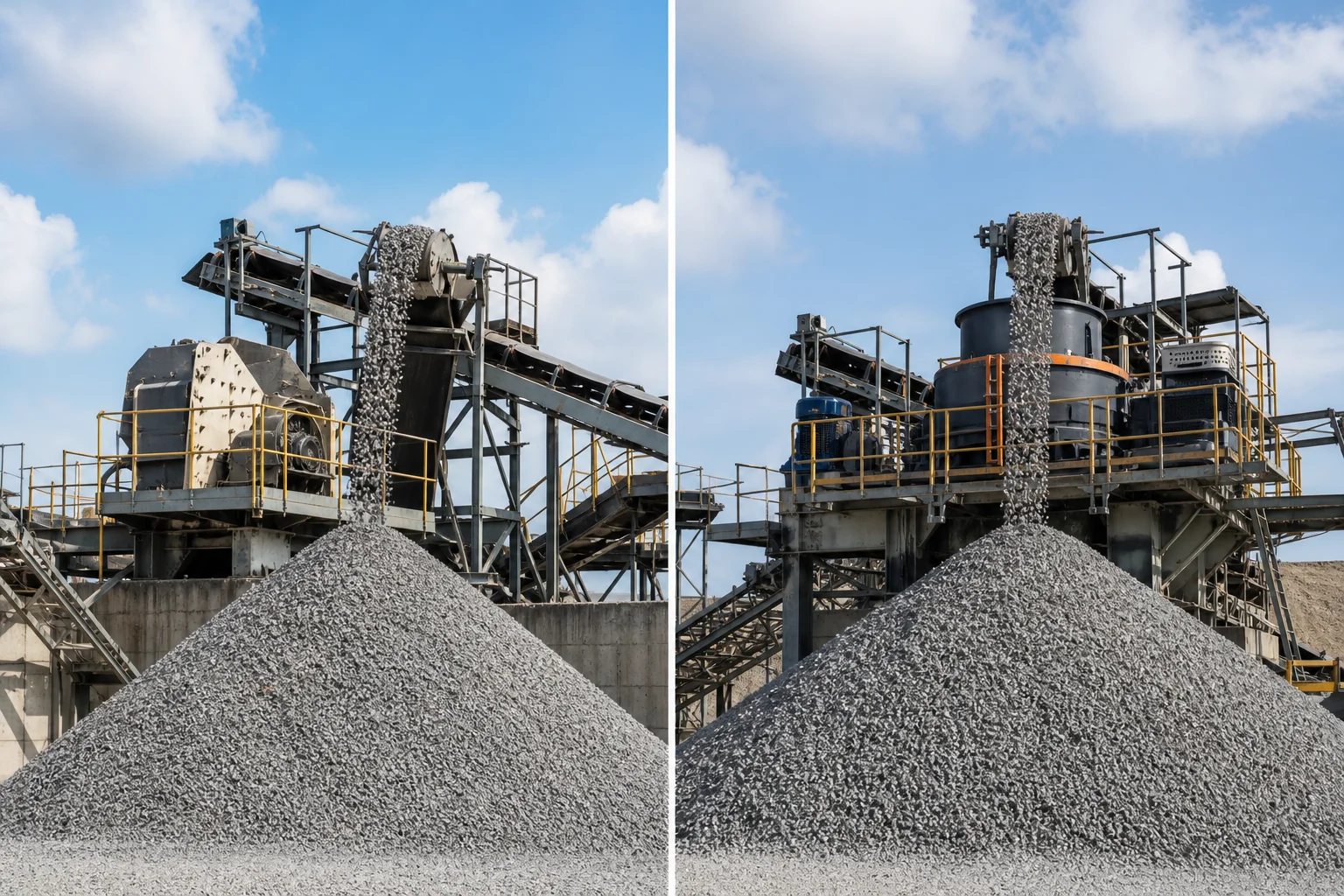
Comparative Engineering Analysis: Tertiary Impact vs. VSI Crushers
Feed Rock Abrasiveness and Silica Content: For medium-hard, low-abrasive rocks (limestone, dolomite with SiO2 < 5%), tertiary horizontal impact crushers deliver exceptional reduction ratios (up to 20:1) with high single-pass cubicity. However, on highly abrasive granite, basalt, or river gravel (SiO2 > 65%), high-chrome blow bars suffer rapid erosion. In abrasive feeds, Sanming VSI crushers operating in "rock-on-rock" autogenous mode protect the rotor using an autogenous rock bed, cutting consumable wear costs by 60%.
Grain Morphology and Cubical Yield: Both machines produce premium cubical particles. Tertiary impact crushers achieve sharp angularity through high-velocity impact against adjustable breaker plates. VSI crushers produce slightly more rounded, polyhedral cubical grains via high-speed inter-particle collision, making VSI aggregate preferred for pumpable self-compacting concrete.
Fines Generation and Gradation Modulus: Tertiary impactors generate a continuous gradation curve across 5–10 mm, 10–20 mm, and 0–5 mm fractions. VSI crushers generate higher proportions of fine sand (0–5 mm) with optimal fineness modulus (FM 2.6–3.0), making VSI ideal when sand-making is the primary revenue goal.
Sanming Wear Metallurgy Upgrades: For tertiary impact crushers, Sanming applies ceramic-matrix composite high-chrome blow bars (Cr26+TiC), providing 2.5 times the operational life of conventional Cr20 castings in mixed aggregate quarries.
Economic Guidelines for Flowsheet Configuration
Sanming Machinery engineers often configure hybrid circuits: secondary multi-cylinder hydraulic cone crushing followed by closed-circuit tertiary impact crushing for limestone, or tertiary VSI shaping for granite aggregate plants.
Technical FAQ: Tertiary Impact vs VSI Selection
Q1: When should an aggregate producer switch from a tertiary impact crusher to a VSI crusher?
If the raw rock contains more than 10% to 15% free silica (quartz), blow bar replacement costs on tertiary impact crushers will exceed $0.80–$1.20 per ton, making an autogenous rock-on-rock VSI crusher far more cost-effective.
Q2: Can a tertiary impact crusher operate in closed circuit with a sizing screen?
Yes. Operating a tertiary impact crusher in closed circuit with a triple-deck vibrating screen allows oversize (+20 mm) material to recirculate, ensuring 100% of the final product meets narrow aggregate specifications.