 English
 Russian
1. The Metallurgy Dilemma: Wear Resistance vs. Fracture Toughness
Horizontal Shaft Impactors (HSI) deliver exceptional reduction ratios and superior cubical aggregate particle shapes. However, operating HSIs in abrasive or semi-abrasive rock feeds (such as gravel with >15% quartz or river gravel) presents a fundamental metallurgical trade-off. Traditional high-chrome white cast irons (e.g., 27% Cr, ASTM A532 Class III) achieve exceptional hardness (62–65 HRC) due to a microstructure dense with eutectic chromium carbides (M7C3). However, this extreme hardness comes at the expense of impact toughness (Charpy V-notch toughness < 5 J). If uncrushable rebar or massive oversize rock enters the chamber, high-chrome bars are susceptible to catastrophic brittle fracture.
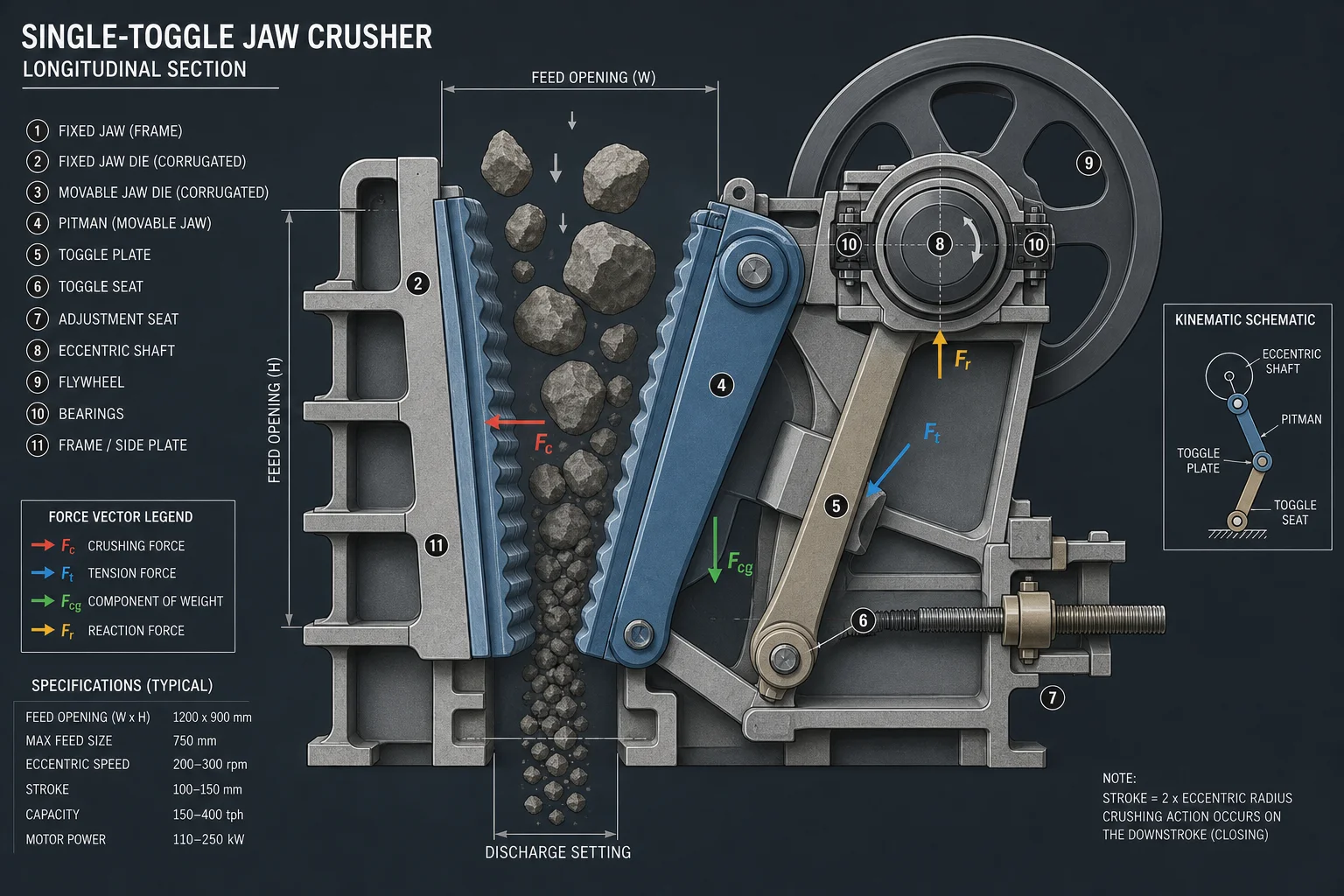
Figure 3: Kinematic schematic of HSI rotor dynamics, blow bar trajectory, and adjustable dual impact apron clearance
2. Ceramic Matrix Composite (MMC) Technology
To overcome the brittleness limitation, Sanming Machinery utilizes Metal Matrix Composite (MMC) blow bar engineering. High-hardness ceramic particles (titanium carbide or aluminum oxide ceramics, achieving ~85 HRC hardness equivalent) are vacuum-infiltrated directly into the high-wear striking face during molten casting. The surrounding alloy steel matrix retains substantial ductility and fracture toughness (20–30 J), absorbing heavy dynamic impact loads while the embedded ceramic micro-inserts resist severe quartz gouging. In field trials crushing abrasive limestone and river gravel, ceramic composite blow bars consistently deliver 2.2x to 3.5x the working lifespan of monolithic high-chrome bars.
3. Rotor Tip Speed and Apron Clearance Calibration
Maximizing blow bar life requires precise calibration of rotor circumferential velocity. For primary and secondary impact crushing, peripheral speeds should be dialed between 32 m/s and 38 m/s. Exceeding 42 m/s in abrasive feeds dramatically increases micro-chipping without proportional capacity gains. Simultaneously, primary and secondary impact apron clearances must be adjusted progressively to compensate for blow bar nose rounding, preventing recirculating slabby oversize from repassing through the rotor circle.
Technical FAQ — HSI Blow Bar Maintenance
Q1: What feed size limit is critical when running high-chrome blow bars?
A1: High-chrome white iron should strictly be limited to feed sizes under 300mm for secondary impactors. Feeding slabs with high kinetic mass risks snapping blow bars along the rotor locking wedge seating.
Q2: How does blow bar nose rounding affect crushing energy consumption?
A2: When the striking edge radius exceeds 25mm, rocks glance off the rotor rather than undergoing direct cleavage fracture. Recirculating fines increase by up to 20%, driving specific power consumption (kWh/t) significantly higher.
Q3: Why are ceramic inserts placed only on the leading striking face?
A3: Concentrating ceramic inserts on the primary strike face preserves ductile steel in the wedge retention root, preventing fatigue cracking under cyclic torque while focusing wear protection exactly where abrasive impact occurs.