 English
 Russian
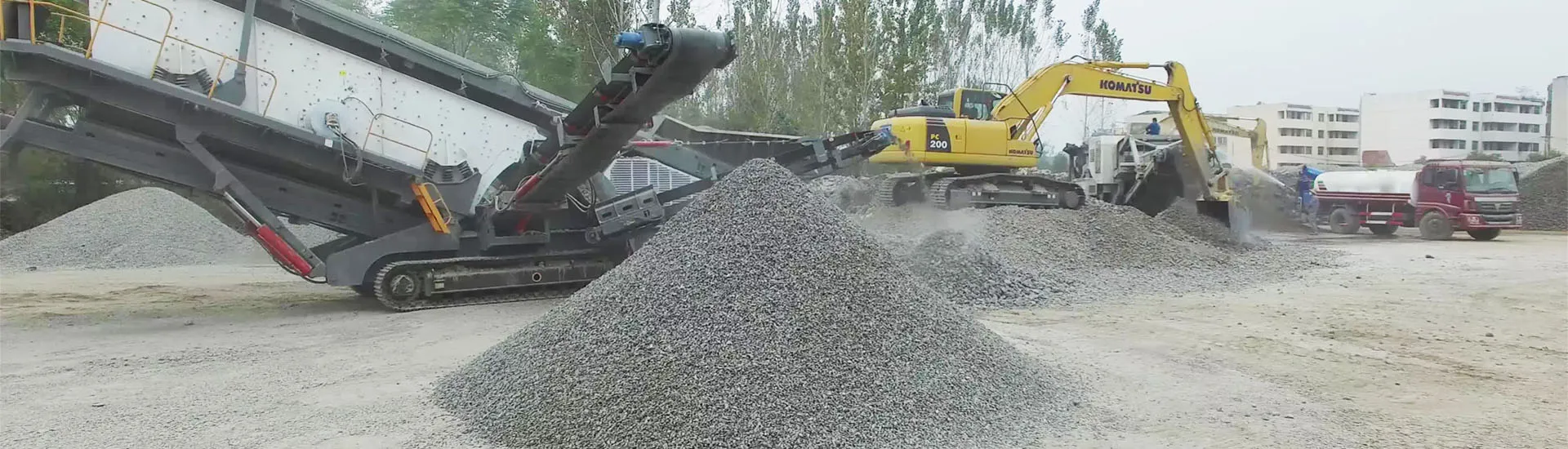
VSI Crusher Rotor Wear Life Optimization
Rotor wear is the single largest operating cost in VSI sand making. This engineering guide examines tungsten-carbide wear metallurgy, rock-on-rock cavity protection, and the field practices that reduce the cost per ton of cubical aggregate produced from abrasive hard rock.
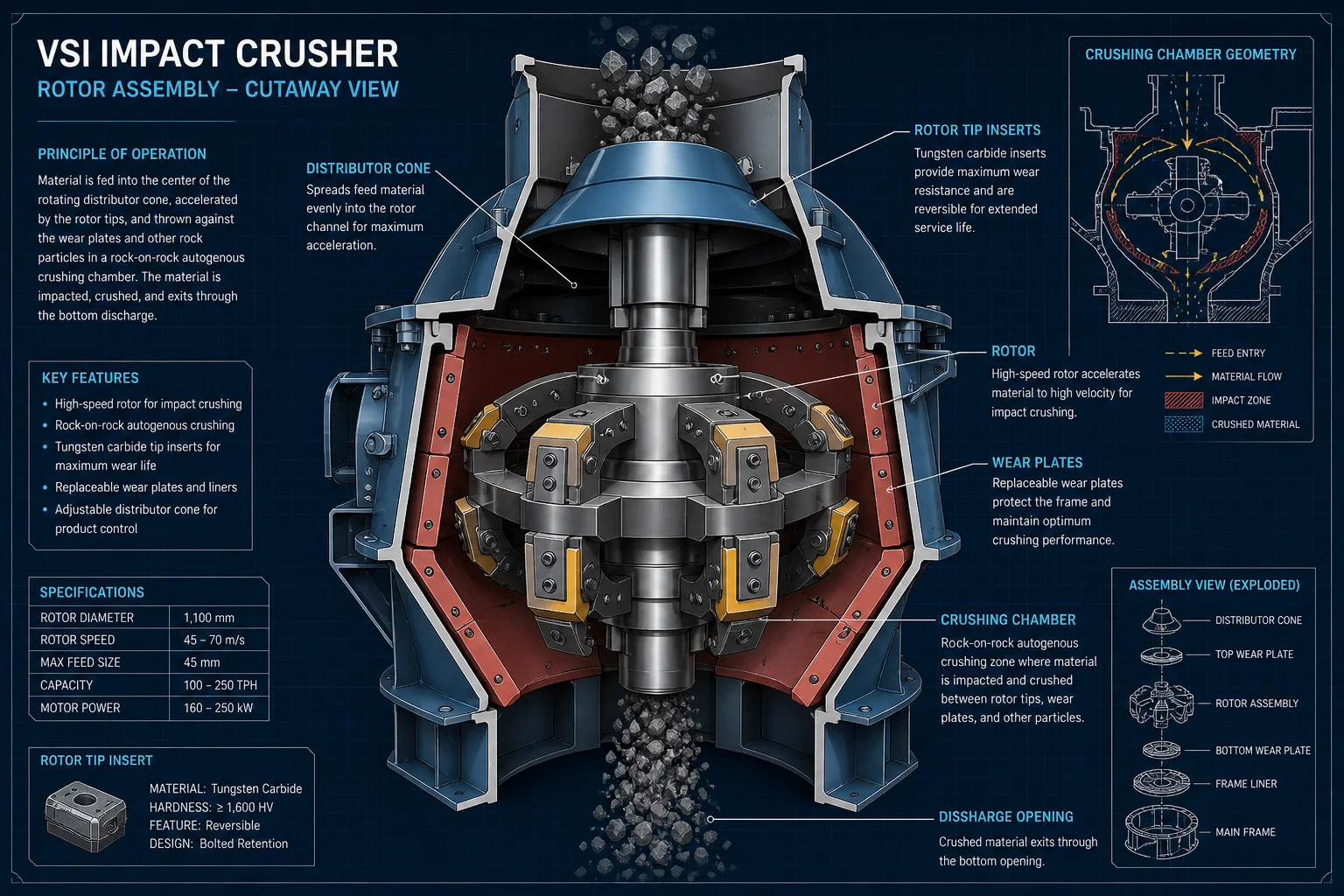
Internal engineering cross-section of high-speed VSI rotor and rock-on-rock autogenous crushing chamber (16:9)
Key Drivers of Rotor Service Life
Use high-grade tungsten carbide tips and inspect them every 200 hours.
Keep feed gradation consistent to avoid uneven rotor loading.
Balance the rotor after every tip replacement.
Technical FAQ
Q1: What is the realistic rotor wear-inspection cycle when crushing granite?
Granite with 25–35% quartz and a compressive strength of 200–300 MPa is a highly abrasive feed. Under this duty, wear tips should be inspected every 150–200 operating hours, and radial rotor wear measured every 300–350 operating hours. Re-index or replace the tip set once wear becomes uneven around the circumference, throughput drops by 8–10%, or the flakiness index rises above 10–12%. For granite, a set of tungsten-carbide tips typically lasts 400–700 operating hours, falling to 250–400 hours on quartzite.
Q2: How does rotor tip speed between 55 and 75 m/s affect particle shape and grading?
Rotor peripheral speed is the main lever for cubical shape. Around 55–60 m/s, kinetic energy is high enough to cleave weak planes in the feed while limiting over-grinding, holding the flakiness index near 10–15% and keeping the fineness modulus of manufactured sand between 2.4 and 3.0. Pushing beyond 75–80 m/s sharply increases dynamic loads, tip wear and ultra-fine generation for little shape gain, whereas dropping below 45 m/s raises flakiness to 20–25% and produces non-spec aggregate.
Q3: How does feed moisture above 3% affect vibration and bearing life?
Above roughly 3% surface moisture, fines begin to adhere to the wear tips and chamber walls. This alters rotor balance, raises the dynamic unbalance force and produces sustained vibration that accelerates bearing fatigue. Combined with sub-zero operation — down to -40°C — increased lubricant viscosity raises start-up torque and the risk of oil starvation. Mitigate with oil pre-heating and low-temperature lubricants, automatic vibration interlocks, and pre-drying or pre-screening the feed to keep moisture below 3%.
Author: Hangzhou Sanming Machinery Co., Ltd. Technical Application Engineering Team
Published: October 14, 2026