 English
 Russian

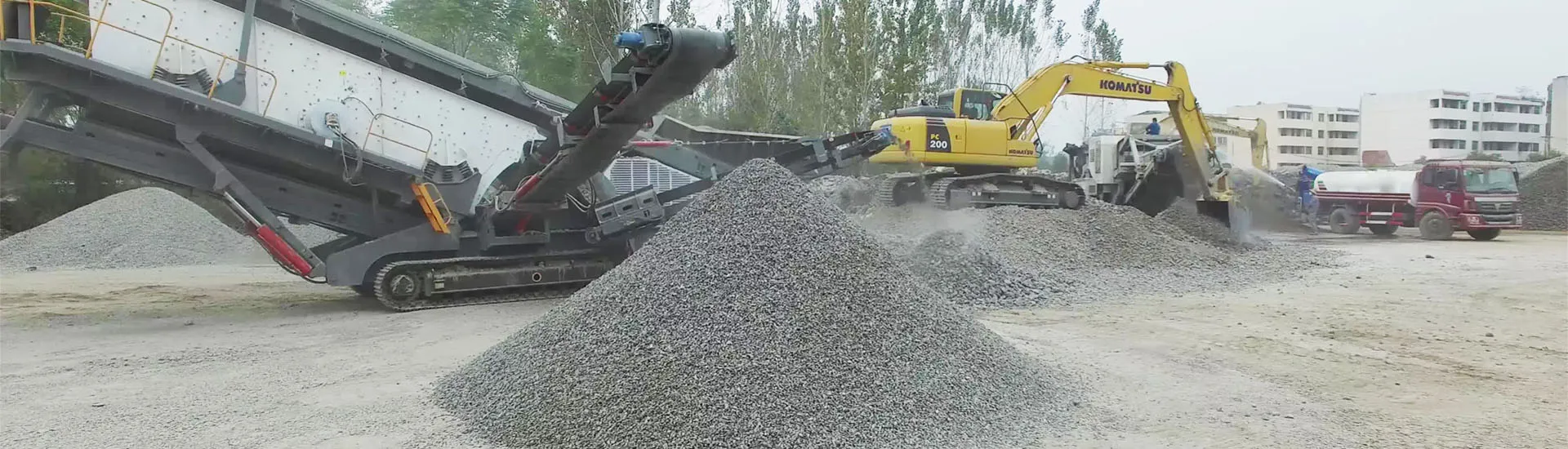
In closed-circuit crushing and classification plants, screening efficiency governs the circulation load of the entire circuit. A 5% drop in screen recovery cascades into crusher chamber packing, excessive fines generation, and unpredicted motor overloads. Maximizing separation efficiency while preventing mesh blinding (coating by damp fines) and pegging (wedge jamming by near-mesh particles) requires precise calibration of screen stroke amplitude, exciter counterweight synchronization, and deck slope angle.

Figure 1: Heavy-duty multi-deck inclined vibrating screen equipped with synchronized oil-lubricated bridge exciter units.
1. Dynamic Stroke Amplitude & G-Force Acceleration Calculation
The stroke amplitude—the total peak-to-peak displacement traveled by the screen body during each revolution—dictates whether particles stratify cleanly into size bands or pack into a dead mass:
Optimal G-Force Target (4.2G to 4.8G): Screen acceleration ($G = (Stroke imes ext{RPM}^2) / 1,788,000$) must provide sufficient lifting force to throw the bed of aggregate clear of the wire cloth or polyurethane deck. An acceleration below 3.5G leads to sluggish bed travel and severe blinding; acceleration exceeding 5.2G causes fatigue cracking in side plates and cross beams.
Stroke vs Operating Frequency Rules:
Coarse Scalping (apertures >50 mm): Large stroke (9–11 mm) combined with lower frequency (750–850 rpm) to dislodge wedged boulders.
Medium Sizing (apertures 10–40 mm): Medium stroke (7–9 mm) at 850–950 rpm for optimal material stratification.
Fine Classification (apertures <6 mm): Small stroke (4–6 mm) at higher frequency (1,000–1,200 rpm) to break surface tension in damp sands.
Counterweight Adjustment SOP: In Sanming Machinery Vibrating Screens, stroke amplitude is adjusted by rotating outer unbalance flyweights relative to inner fixed weights. Both left and right exciter pods must be calibrated to the exact identical angle setting (±0.5°). Any phase mismatch creates racking forces that snap cross-member welds.
| Classification Stage | Typical Aperture | Stroke Amplitude | Shaft Speed | Deck Angle |
|---|---|---|---|---|
| Primary Scalping | 60–150 mm (Grizzly bars) | 9.5–11.5 mm | 750–820 rpm | 18°–22° inclined |
| Secondary Sizing | 15–45 mm (Wire / PU) | 7.5–9.0 mm | 880–940 rpm | 16°–18° inclined |
| Tertiary Fine Sand | 2–8 mm (Slot Polyurethane) | 4.5–6.0 mm | 1,000–1,150 rpm | 0°–5° horizontal (Linear) |
2. Exciter Timing & Bearing Operating Temperature Controls
Heavy-duty spherical roller bearings used in screen exciters (such as SKF/FAG 223 series with machined brass cages) operate under continuous centrifugal acceleration. Maintaining bearing uptime requires strict lubrication and alignment discipline:
Cardan Shaft Timing: On dual-exciter linear motion screens, the timing belt or Cardan drive shaft must synchronize counter-rotating shafts at precisely 180° opposing phase. Out-of-time shafts generate lateral rocking motion that wears suspension coil springs unevenly.
Grease / Oil Purge Cycles: Screen bearings should run on ISO VG 220 synthetic gear oil or high-drop-point lithium complex grease with EP additives. Operating temperatures should stabilize at 55°C to 70°C. A temperature exceeding 85°C indicates grease overfilling, contaminated seals, or internal clearance loss due to improper shaft tolerances.
Spring Deflection Check: Measure static and dynamic spring deflection across all four corner support banks. A variance exceeding 5 mm indicates unequal material loading, causing the screen body to twist dynamically.
3. Technical FAQ: Vibrating Screen Troubleshooting
Q1: What causes near-mesh particles to peg continuously in top-deck wire cloth?
A: Pegging occurs when near-size rock lumps hit apertures at low velocity. Switching to square-to-round wire cloth profiles or installing self-cleaning wave mesh panels with polyurethane intermediate strips provides flexing action that kicks trapped stones clear.
Q2: Why did new side plates develop fatigue cracks near the exciter bridge?
A: Cracking around exciter mounts is triggered by loose huck-bolts or operating near the structural natural resonance frequency during coast-down. Adding dynamic braking relays cuts resonance coast-down time from 40 seconds to under 6 seconds.
Q3: How does feed box distribution affect screen recovery?
A: If material lands centrally in a concentrated heap rather than spreading evenly across the full width of the feed deck, the active screening area is reduced by 50%, forcing oversized material into product chutes.
4. Screen Design and Aggregate Plant Engineering
Sanming Machinery supplies circular, linear, and high-frequency elliptical vibrating screens engineered for tough aggregate and mining duties. Contact our screening specialists for stroke diagnostic cards, deck panel conversions, and complete plant layout drawings.